
The Royal Horticultural Society is warning that increasing levels of hard surfacing and evidence of an alarming trend of Britain paving over its front gardens is causing environmental problems, with increased risk of flooding at top of the list.
 The comments come in a new report by the Society, Greening Grey Britain, which is calling for nationwide-action to reverse the trend.
The RHS-commissioned Mori Polls of 2005 and 2015 reveal that three times as many front gardens are now paved over compared to ten years ago, a total increase of 15 square miles of ‘grey’, and that plant cover in front gardens has decreased by as much as 15%. Over five million front gardens now have no plants growing in them (i.e. one in three for the UK) and four and a half million front gardens (one in four) are completely paved over.
The significant increase in 100% paved over gardens is the biggest concern – the number of front gardens which are 100% paved over has trebled in the last decade. London is the worst culprit, with half of all front gardens paved over and a 36% increase over the last ten years. Across the UK as a whole, nearly 54% of the total surface area is now hard surfacing (grey).
In addition, the RHS says that 45% of local authorities are currently considering either selling parks and green spaces or transferring their management to others.
The RHS believes it is vital for the country as a whole, including the public, to start tackling the issue and pledge to get Greening Grey Britain – not least to protect the UK’s homes from flooding. The RHS’s Greening Grey Britain campaign has set a three year target to transform 6,000 grey spaces across the UK into thriving planted up places.
Sue Biggs, RHS Director General commented:
“There is a recognised critical need to increase green in our towns and cities by 10% to help combat predicted rises in temperature. The evidence suggests we need to increase this target to deal with the 15% loss of greenery in front gardens. We need to urgently increase plants in urban environments.”
Government Climate Change Committee to assess UK progress on reducing vulnerability to flood and drought risks
The issue has been separately highlighted by the UK Committee on Climate Change, the independent body which advises the UK Government and Devolved Administrations and reports to Parliament on progress made in reducing greenhouse gas emissions and preparing for climate change.
The Committee is due to publish its latest assessment of the UK’s progress on adapting to climate change at the end of June.
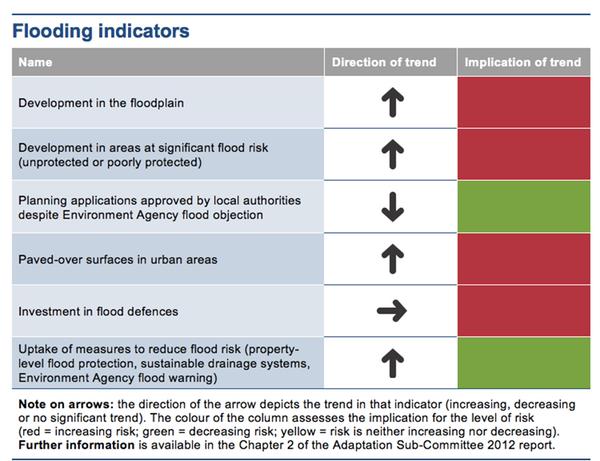
The Committee will be assessing outcomes with indicators which are designed to show what is actually happening to vulnerability to climate change impacts on the ground.
David Thompson, Senior Analyst on the Adaptation Sub-Committee at the CCC commented:
“In this way we’re able to make a robust and balanced assessment as to whether progress is being made to reduce the UK’s vulnerability. For example, is new development appropriately designed to be resilient to flooding, include measures to soak up excess rainwater and water-efficient? If so, then we are likely to be making progress to reduce, or at least not increase, vulnerability to the risks of more severe flooding and drought in the future.”
“On the other hand, if we find that inappropriate development is going ahead in areas of high flood risk, and that we are paving-over front gardens with hard surfacing, and that new homes are not routinely fitted with water meters, then the UK is almost certainly increasing its vulnerability to climate risks.”
Click here to download Greening Grey Britain