
What has been described as the UK’s largest ever environmental legal claim against industrial chicken production firms Avara Foods, its subsidiary Freemans of Newent Litd and Dwr Cymru Cyfyngedig Welsh Water for polluting the Wye catchment reaches the High Court today.
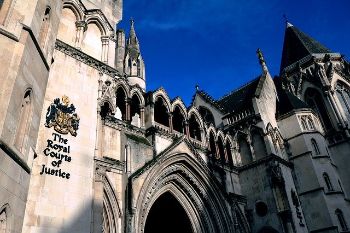
The court action blames the companies for extensive and widespread pollution in the rivers Wye and Lugg and their tributaries. Welsh Water is blamed for pollution in the river Usk.
The three companies have denied the claims to law firm Leigh Day which represents the claimants. The legal case is the biggest ever to be brought in the UK over environmental pollution in the UK.
Now the claims have been served on the defendants and the Particulars of Claim are with the High Court. Avara, Freemans and Welsh Water must file a defence and, unless the claim is settled, it will be heard in a civil trial at the High Court. The defendants also have the right to apply for the claims to be struck out.
More than 4,000 people who have signed up to be claimants are all residents, local business owners, or people who use the rivers Wye, Usk and Lugg for leisure and family time. They include people with riverside properties or fishing rights and other householders or tenants who live or run businesses near to intensive poultry units, chicken growing farms or sewerage infrastructure. Businesses who rely on local tourism and river activities have also joined the claim.
All allege that Avara, Freemans and Welsh Water are responsible for river pollution and the severe impact it has had on businesses, recreation, tourism and property values since August 2019 and ask the court to award substantial damages for that period. They also ask the court to order all three companies to clean up the rivers and restore them to health.
A key section of the claim is brought on behalf of people impacted by the Lugg Moratorium – a building ban in force around the river Lugg since 2019 in an attempt by Herefordshire County Council to protect the river from further pollution. It is estimated that the moratorium has cost individual claimants tens of thousands of pounds in the period since 2019 in planning fees and financial losses.
The claim against Avara, Freemans and Welsh Water alleges that pollution has been caused by water run-off from farm land containing high concentrations of phosphorus, nitrogen and bacteria resulting from the spreading of thousands of tonnes of poultry manure and sewage bio solids. It also alleges bacteria and nutrient pollution has been caused by the discharge of sewage directly into the rivers from Welsh Water sewerage systems.
High concentrations of phosphorus and nitrogen in the river have caused substantial growth of algae which cuts oxygen, suffocating fish and harming fauna, leading to key species deaths, as well as reduced growth and bad smells as it decays.
The claim alleges the pollution has caused private nuisance, public nuisance and trespass (from sewage deposited on the river bed) as well as negligence, and that the deposit of manure and bio solids on agricultural land is a breach of section 73(6) of the Environmental Protection Act.
The legal claim calls for damages for the impact on local properties of odours, insects and noise nuisance at 101 industrial chicken growing farms at least, as well as sewage pumps and treatment plants.
The claim is led by Leigh Day international and group claims partner Oliver Holland.
Defence appears to shift responsibility on to local farmers and reflect tactics of Avara’s ultimate parent company, Cargill Inc
The Wye pollution environmental lawyers have criticised messaging by defendant Avara Foods Ltd and Freemans of Newent Ltd, part of the US based Cargill conglomerate, which appears to shift responsibility on to local farmers in response to allegations that the industrial poultry producer has materially caused the pollution of the rivers Wye and Lugg, and their tributaries.
After Avara was officially served with the legal claim in October, and in response to media reports, it stated:
“Where poultry manure is used as fertiliser, it is for other produce in other agricultural sectors. Individual farmers are responsible for how nutrients are used in their arable operations. Avara is not involved in any arable operations and has no control over this activity.”
The statement is disputed by the claimants in the Wye, Lugg and Usk claim, who feel that no individual farmer can be responsible for the pollution of an entire river system spanning three counties.
The lawyers representing Wye, Lugg and Usk residents say that the tactic of shifting blame on to individual farmers echoes that of large companies when facing multiple similar cases in relation to pollution from industrial poultry production affecting US rivers and lakes.which have faced similar river pollution allegations in the US.
The Wye legal claim relates to pollution in the rivers Wye, Lugg and Usk, which residents say has negatively impacted property values, local businesses, and people’s enjoyment of the rivers.
It is argued that run-off from the industrial-scale quantities of chicken manure produced by the supply chain of these companies has resulted in high concentrations of phosphorus leeching into the rivers, causing environmentally damaging algal blooms.
The claim, which now has more than 4,000 participants, argues that these companies market themselves as having full control over their supply chain, and exercise substantial economic and contractual dominance over the local farms that supply them. As a result, members of the community are bringing a legal action asking the companies to take accountability for the scale of the manure they have caused to be produced and spread within a single UK river system.
The claim argues that responsibility should lie with industrial scale meat production, and the companies that have profited from it.
The first US river pollution case relates to the Illinois River in Oklahoma, where a US court held that pollution in the river had been caused by industrial-scale poultry operations overseen by large food companies, with Tyson Foods and Simmons Foods also named as defendants to the legal action.
Responding to the claim in 2018, Cargill stated in a court filing that it "has neither the ability nor authority to control or affect the timing, manner and location of the application of poultry litter.”
In 2023, the district court in Oklahoma determined that the companies were “vicariously liable for poultry waste causing phosphorus to physically invade” and concluded that poultry waste run-off from land surrounding the river had caused damage to it, and that the companies defending the claim had been aware “since at least the mid-to-late 1980s” of the damage caused to the river by phosphorus run-off.
The second US pollution case relates to lakes Eucha and Spavinaw in Tulsa, where the claimant argued that six poultry companies including Cargill Inc should be held liable for the pollution of the watershed of the city of Tulsa. The defendant companies are reported to have settled for $7.3 million. The 2003 summary judgment decision in the Tulsa case, which also noted that “in the mid to late 1990s, the industry became aware of the potential environmental impact from the phosphorus or phosphates contained in poultry litter”, and that Cargill had claimed to be meeting with its growers in the lakes’ watershed regarding manure management since 1996.
Lawyers representing people in the Wye, Lugg and Usk claim say Avara’s response to the claim stating “individual farmers are responsible for how nutrients are used in their arable operations” mirrors these pasts attempt by Cargill in the US case to shift responsibility for the alleged environmental cost of their industrial activities on to local farmers.
Leigh Day partner Oliver Holland, who represents claimants in the Wye, Lugg and Usk claim, said:
“The claimants in the Wye, Lugg and Usk case do not agree with Avara’s statement regarding local farmers. They do not believe that it can reasonably be argued that individual farmers are responsible for the widespread pollution of the Wye and Lugg, which spans an entire river system across three counties.
“This claim argues that responsibility instead lies with industrial scale poultry production, in what is a traditionally rural agricultural area, and the corporation supplying and profiting from the majority of these operations.
"The two rulings in the US indicate that members of this corporate group have known about the severe environmental impact of manure produced by intensive poultry units within river catchments since at least the 1980s. This claim aims to hold alleged polluters in the Wye, Lugg and Usk catchments to account for the damage caused there.”