
The world’s rapidly dwindling freshwater resources could be further depleted if plans for hundreds of new coal power plants worldwide go ahead, threatening severe drought and competition, according to a new Greenpeace International report.
Image: Industrial Park alongside the Yellow River in China
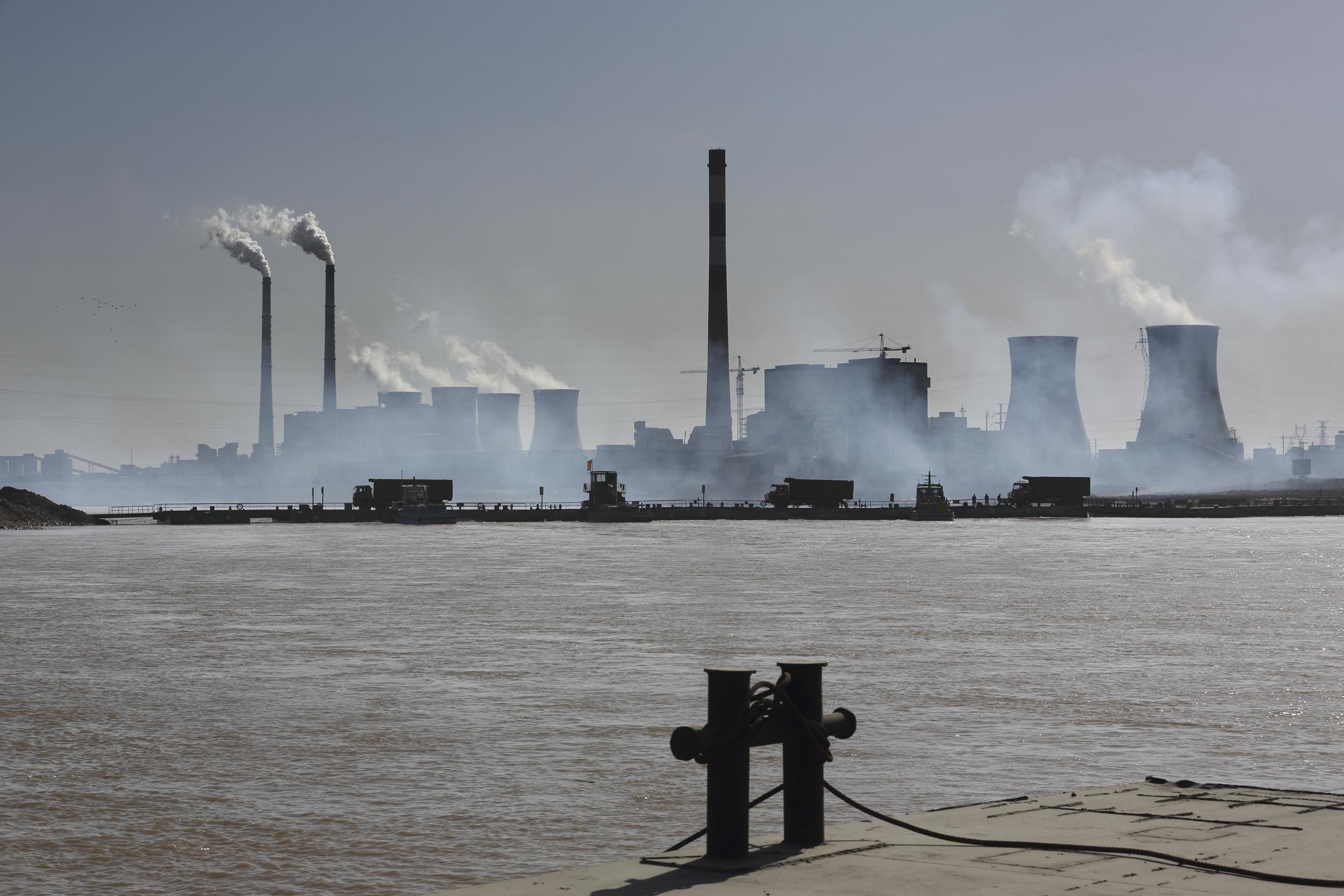 The report is the first global plant-by-plant study of the coal industry’s current and future water demand. The research also identifies the regions that are already in water deficit, where existing and proposed coal plants would speed up the depletion of water resources.
According to Greenpeace, if all the proposed coal plants were built the water consumed by coal power plants around the world would almost double.
Globally, 8,359 existing coal power plant units already consume enough water to meet the basic water needs of 1 billion people. A quarter of the proposed new coal plants are planned in regions already running a freshwater deficit, where water is used faster than it is naturally replenishing, which Greenpeace calls red-list areas.
The top countries with proposed additional coal plant capacity in red-list areas are China (237 GW), India (52 GW) and Turkey (7 GW). Almost half of the proposed Chinese coal fleet is in red-list areas. In India and Turkey this figure is 13%.
Coal is one of the most water-intensive methods of generating electricity. According to the International Energy Agency, coal could account for 50% of the growth in global water consumption for power generation over the next 20 years.
Greenpeace research shows that if the proposed coal plants come online, their consumption of water will increase by 90%.
“Governments must recognise that replacing coal with renewable energy will not only help them deliver on their climate agreements, but also deliver huge water savings. It’s more urgent than ever that we move towards a 100% renewable future,” said Iris Cheng, lead author of the Greenpeace International report.
The NGO is proposing three key policy steps, which it said, if taken together, could turn around the coal industry’s water use:
- An immediate moratorium on coal expansion in regions with high water stress, and a transition from coal to energy that uses little or no water, like solar PV and wind.
- Replacing the planned coal plants in the red-list areas with renewable energy, such as solar PV and wind power, would avoid consumption of 1.8 billion cubic metres of water per year in China, and 1.2 billion cubic meters per year in India.
- Closing plants that have been operating for 40 years. The US could save 9 billion cubic meters of water by shutting down its old coal power plants.
Click here to download The Great Water Grab: How the coal industry is deepening the global water crisis