
Smart Water Network Forum issues call for abstracts for 17th SWAN Annual Conference in May 2027
 SWAN – the Smart Water Network Forum - has announced the call for abstracts for the SWAN 17th Annual Conference in Porto, Portugal on May 18-20, 2027.
Water Breakthrough Challenge 7 to award £50 million to accelerate transformational innovation in water sector
 The Water Innovation Fund has launched the seventh Water Breakthrough Challenge, which will award up to £50 million to collaborative innovations that tackle the water sector’s biggest issues.
UKCEH launches major new Digital Platform to help UK tackle growing flood and drought risks
 The UK Centre for Ecology & Hydrology (UKCEH) has launched a major new digital platform which will give researchers, government and industry access to the high-resolution water data needed to better understand, model and respond to floods and droughts across the UK.
Portsmouth Water partners with Ministry of Defence and Smarti on water-saving pilot project
 Portsmouth Water has partnered with the Ministry of Defence (MOD) and technology specialist Smarti to launch a new pilot project aimed at reducing water consumption and improving efficiency across operational sites.
Scottish Water trials mobile reed bed pilot to bring flexible wastewater treatment to rural sites
 A mobile plant-based approach to wastewater treatment which can be targeted at specific sites as required is being trialled by Scottish Water for the first time - the mobile reed beds can be easily moved between sites as needed.
Thames Water uses satellites, AI and thousands of acoustic sensors to find and fix leaks faster as South‑East drought pressure intensifies
 Thames Water is using satellite data, AI and tens of thousands of acoustic sensors to find leaks and fix leaks faster as as drought conditions and temporary use restrictions put extra pressure on water resources across the region.
Wildfires - United Utilities introduces heat seeking drones to detect lingering hotspots
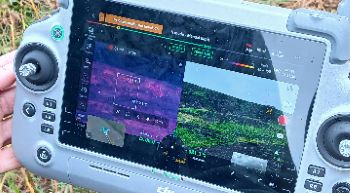 Heat seeking drones are giving United Utilities ‘eyes in the sky’ as teams continue to tackle lingering heat hotspots following recent moorland fires.
Scottish Water uses innovative technology to reduce plastic waste in laboratories
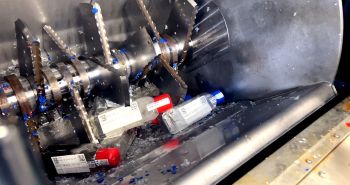 Scottish Water has become the first utility in the world to adopt an innovative technology aimed at substantially reducing plastic laboratory waste and making the handling process more efficient, lower carbon and easier to track.
No Dig Live to reveal technology changing how Britain installs, maintains and renews below-ground infrastructure
 This September, the technology changing how below-ground infrastructure is installed, repaired and renewed will be brought above ground at No Dig Live 2026.
National Cyber Security Centre adds water sector example to Secure Connectivity Principles for Operational Technology
 The National Cyber Security Centre (NCSC) a part of GCHQ, has added a water sector example to the NCSC’s Secure Connectivity Principles for Operational Technology (OT) demonstrating how organisations can apply the Principles.
News Showcase
-
Enpure Ltd and Clean TeQ Water Ltd in new collaboration for Moving Bed Ion Exchange-based nutrient removal
 Enpure Ltd and Clean TeQ Water Ltd have announced a collaboration agreement to bring Clean TeQ Water's Moving Bed Ion Exchange-based nutrient removal technologies to water utilities across the UK.
 -
BactoSense ID cuts wastewater and bathing water bacteria testing from days to minutes
 Near-real-time microbial monitoring of wastewater discharge and bathing waters is now possible thanks to the BactoSense ID solution created by Swiss-based bNovate Technologies.
 -
ABB launches digital platform for optimizing operation of water networks
 ABB has launched AquaMaster+™, a digital platform for smart water network management, designed to help water utilities monitor, analyze and manage their water networks, preventing pipeline water losses and optimizing operations.
 -
Safe access solutions a key requirement for water sector and other Critical Infrastructure Providers
 Craig Nienaber, Business Development Manager for Safe Access Solutions (SAS) at HUBER Technology, explores why the company is seeing a growing level of interest in its safe access solutions for critical infrastructure providers, including their application in wastewater treatment assets.
Expert Focus


News Sections
Other Latest News
- United Utilities £720m tender for Design and Integration Partner on Windermere programme - interested suppliers invited to register for webinar
- Natural England launches preliminary market engagement for upcoming £120 million ECS6 Framework for Environmental Services
- Anglian Water appoints Ferrovial-MWH JV to £1.5 billion AMP8 Major Projects Framework
- Uisce Éireann launches public consultation on future of wastewater services in Ireland
- Smart Water project trials satellite technology to help spot risks to drinking water sources earlier
- Portsmouth Water partners with Lightsonic on leak detection via fibre optic cables
Watch
-
Southern Water showcases last footage inside Yew Hill Reservoir before filling
 Southern Water has released film and images showing what it’s like to walk inside Hampshire’s expanded Yew Hill underground reservoir for the very last time, before it gets filled with water.
 -
Scottish Water completes £235m investment in two-way connection between drinking water networks
 Hear how Scottish Water has completed its £235 million Ayrshire Glasgow Resilience Project - customers across Greater Glasgow, Ayrshire and East Renfrewshire will now benefit from a more secure and resilient water supply.
 -
United Utilities accelerates investment to reduce spills from storm overflows across Northwest
 Hear how United Utilities is accelerating its investment to reduce spills from storm overflows across the Northwest.
Top Stories
- United Utilities £720m tender for Design and Integration Partner on Windermere programme - interested suppliers invited to register for webinar
- Anglian Water appoints Ferrovial-MWH JV to £1.5 billion AMP8 Major Projects Framework
- British Water - 2026 Water & Wastewater Performance Survey says industry collaboration moving in right direction
Login / Register
New Account Registrations
To register for a new account with Waterbriefing, please contact us via email at waterbriefing@imsbis.org
Existing waterbriefing users - log into the new website using your original username and the new password 'waterbriefing'. You can then change your password once logged in.