
Northumbrian Water and Softwire secure £1.6 million for AI smart alarm to reduce water disruption
 Northumbrian Water has been awarded £1.6 million from the Ofwat Innovation Fund to develop Smart Alarm Management (SAM), a project that will help teams respond more quickly to issues on the water and wastewater network.
Yorkshire Water - aerial mapping to prevent bathing water pollution identifies over 32,000 potential misconnections
 Aerial mapping by Yorkshire Water to map the county’s bathing waters to help cut pollution has identified over 32,000 potential misconnections, with 2,800 connecting directly to watercourses.
Growing uptake of satellite technology - bridging the connectivity barrier for smarter water networks
 Eric Verheylewegen, VP Strategic Initiatives Enterprise and Land Mobile at Viasat, takes a look at why the water sector in showing growing interest in using satellite technology to bridge the existing “not spots” connectivity barrier for smarter water networks.
Amazon data centres - 7 times more water-efficient than industry average
 Amazon is reporting that its data centres are seven times more water-efficient than the industry average – saying it is constantly innovating to reduce the amount of water used, resulting in a 52% improvement in water efficiency since 2021.
Scottish Water Horizons - can Scotland support more data centres?
 In a blog posted by Scottish Water, Colin Lindsay, Developer Services Manager at Scottish Water Horizons says that locating data centres in the right place is key to ensuring they are sustainable in terms of water resilience and wider infrastructure capacity.
Mining Remediation Authority signs new mine water heat deal with wine giant
 Lanchester Wines, the first private business to use mine water heat in Great Britain, has signed a new access agreement with the Mining Remediation Authority.
Why AI sits at the heart of the blue economy transition - using AI to tackle hidden ocean biodiversity risks
 In an Expert Focus article for WaterBriefing, Stig Martin Fiska, Global Head of Cognizant Ocean, takes a look at why AI sits at the heart of the blue economy transition – and using AI to tackle hidden ocean biodiversity risks.
Yorkshire Water to expand successful sewage blockage tech pilot project to 15 new sites
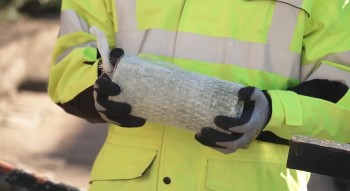 Yorkshire Water is set to roll out innovative Bio-Block® technology at 15 new sites following a successful trial to stop blockages caused by fats, oils and grease (FOG).
New report warns water and energy policies will make or break UK's AI future
 A new report is highlighting that overlooking sustainable water and energy management is actively hindering building and operating data centres efficiently and responsibly, threatening the UK's pursuit of digital leadership.
Yorkshire Water begins real time AI water quality project at designated bathing water sites
 Yorkshire Water, in collaboration with AI specialists UnifAI Technology, has started an innovative research project that uses AI modelling to provide real-time water quality predictions at designated bathing water sites across the county.
News Showcase
-
Safe access solutions a key requirement for water sector and other Critical Infrastructure Providers
 Craig Nienaber, Business Development Manager for Safe Access Solutions (SAS) at HUBER Technology, explores why the company is seeing a growing level of interest in its safe access solutions for critical infrastructure providers, including their application in wastewater treatment assets.
 -
Albion Water appoints new Director of Business Development
 Albion Water, the first NAV (New Appointment & Variation) to have been established in1999 and now under the ownership of SDS Water Group, has appointed Andy Holland as its new Director of Business Development.
 -
Webinar to explore moving indirect potable water reuse to full implementation
 UK water companies are invited to join an upcoming webinar which will explore how the sector can take indirect potable reuse (IPR) from concept to full-scale operational reality.
 -
Kohtari CEO says joined-up water intelligence needed to predict, not just react - not more data
 James Sumsion, CEO of predictive water intelligence specialists Kohtari, says the water sector needs to take a giant leap forward, so that it can anticipate and act upon water quality issues - rather than merely react.
Expert Focus


News Sections
Other Latest News
- Scottish Water tenders £60 million contract for supply and service of filtration media
- Southern Water seeks supply chain engagement on proposed data centre transformation & rationalisation programme
- Uisce Éireann welcomes Government approval of €2 billion Investment to support new homes and growth across Ireland
- Northumbrian Water – new £13 million pipeline marks the start of environmental upgrades
- Stantec to support vital next stage of Poole Water Recycling and Transfer SRO
- AtkinsRéalis signs three-year framework extension with South East Water
Watch
-
Scottish Water completes £235m investment in two-way connection between drinking water networks
 Hear how Scottish Water has completed its £235 million Ayrshire Glasgow Resilience Project - customers across Greater Glasgow, Ayrshire and East Renfrewshire will now benefit from a more secure and resilient water supply.
 -
United Utilities accelerates investment to reduce spills from storm overflows across Northwest
 Hear how United Utilities is accelerating its investment to reduce spills from storm overflows across the Northwest.
 -
Working for WSP - what if you could build a career as unique as you? With us, you can
 Find out more about the remarkable career opportunities on offer at WSP - scroll down to watch the inspirational video.
Top Stories
Login / Register
New Account Registrations
To register for a new account with Waterbriefing, please contact us via email at waterbriefing@imsbis.org
Existing waterbriefing users - log into the new website using your original username and the new password 'waterbriefing'. You can then change your password once logged in.