

A new report says that investing in ‘green infrastructure’ like restoring floodplains or wetlands to bolster flood prevention not only generates more environmental and socio-economic benefits, but also lowers the amount of financial investment needed to defend against damaging floods.
This is the conclusion of a new European Environment Agency (EEA) report which assesses the green options available in building climate resilience in wake of the increased risk posed by river flooding.
The report ‘Green infrastructure and flood management - promoting cost-efficient flood risk reduction via green infrastructure solutions,’ outlines the challenges and opportunities posed by using more environmentally friendly options to bolster defences against river flooding.
The report looks specifically at six case studies on the Elbe (Germany), the Rhône (France), the Scheldt (Belgium) and the Vistula (Poland) river basins, and points to the potential, in terms of suitable space, for restoring floodplains alongside them.
Risk of flooding set to increase
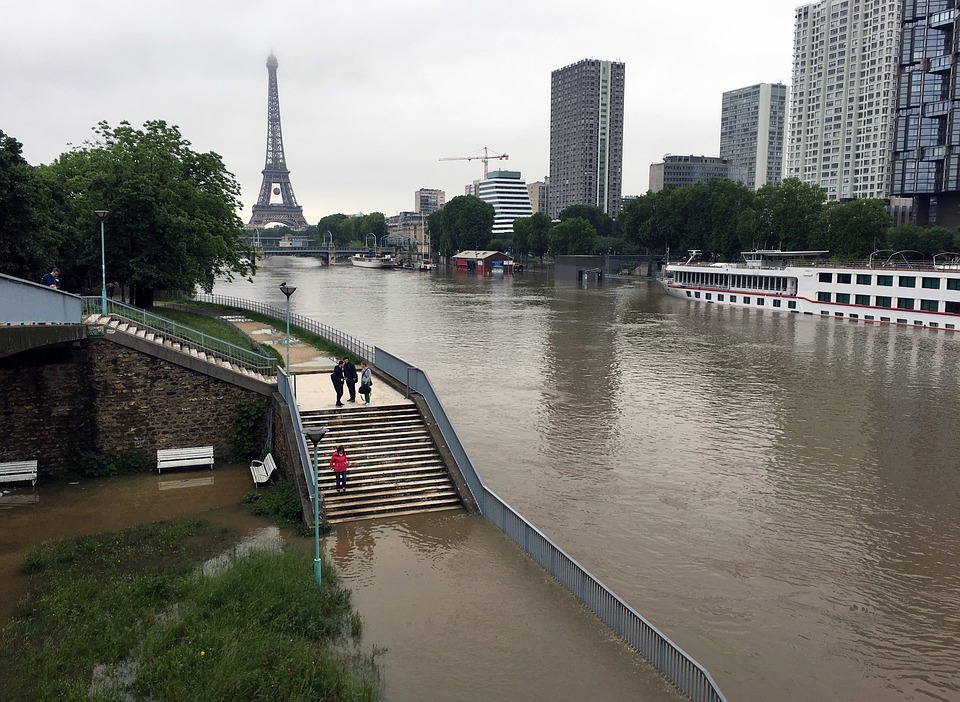 River floods and flash floods remain one of the most frequent natural hazards in Europe. Around 20% of European cities are vulnerable to river floods. Increased urbanisation and soil sealing, along with wetland conversion or degradation, have contributed to increased run-off and flood risk and the frequency and intensity of floods are projected to increase over the coming decades due to climate change.
Efforts have been made to control flooding across Europe for centuries via measures which have transformed the natural landscape and altered water flows throughout Europe.
Rivers have been dammed and constrained by levees, and dikes have been built to protect vulnerable land. Wetlands have been converted to agricultural and urban land use and rivers disconnected from their natural floodplains.
The EEA said that while the use of man-made structures can significantly help reduce the risk of flooding, they often come at a sizeable financial price and at a cost to local water absorption capacity, wildlife, fish and river ecosystems. Their construction has also raised the risk of floods further downstream due to higher or cumulating water peaks and higher water speed.
The case for nature-based solutions
 Limited budgets, updated European regulations and policies on water, agriculture, climate adaptation, and climate change itself are driving the push for more sustainable and lower investment solutions to address the challenges posed by flooding.
Using green infrastructure like floodplains and wetlands are cheaper investments which need little or no maintenance, the report says. They are also much more environmentally friendly than cement dams or barriers, which can pose problems for local ecosystems, and can provide benefits beyond flood protection, such as carbon sequestration, homes for wildlife, recreation opportunities and clean water. The EEA report flags up the Dutch national plan ‘Room for rivers’ as a good example of such measures in action.
Looking ahead - next steps
The report says that more needs to be done to improve knowledge, experience and capacity in adapting building regulations to include nature-based solutions for flood defences in many EU Member States.
It also notes that much better coordination on flood management plans is required between upstream and downstream areas and between countries that share rivers to enhance decision-making and implementation of green infrastructure for flood risk management.
The report points out that it can be difficult to make a valid comparison between GI and grey (manufactured) infrastructure for a number of reasons. A focus on incurred expenses and benefits is challenging since GI often provides multiple benefits (e.g. clean water, carbon sequestration, etc.) which can be difficult to account for. Grey infrastructure solutions typically only fulfil single functions that often reach their desired benefit levels straight after construction (but with increasing maintenance costs over time). In contrast, GI not only generates more environmental and socio-economic benefits, they also increase in the long term.
The report presents improved evidence for the financial justification of green investments based on the case studies,
Improved evidence for financial justification of green investments
According to the EEA, governments and investors are beginning to realise that the traditional so-called grey infrastructure solutions (e.g. sea walls, levees, dikes, sewerage systems) are not necessarily the most cost-efficient investments.
In 2014 the European Investment Bank (EIB) launched the new Natural Capital Financing Facility (NCFF), which aims to 'demonstrate that natural capital projects can generate revenues or save costs, while delivering on biodiversity and climate adaptation objectives'
Under the NCFF, the EIB will provide loans and investments in funds to support projects in Member States that promote the preservation of natural capital (including GI projects).
The projects consist mainly of a pipeline of replicable, bankable operations that will serve as a 'proof of concept' and demonstrate the attractiveness of such operations to investors.
Click here to download the full report Green infrastructure and flood management
 With the UK government demanding a 50% reduction in storm overflow spills by 2029, the era of reactive management is over. Speaking in the House of Commons on 21 July 2025, then environment secretary Steve Reed said, “This Government will cut water companies’ sewage pollution in half by the end of the decade.”
 ERG, the leading supplier of odour control systems and industrial gas cleaning & thermal systems, has been awarded the coveted King’s Award for Enterprise.
 Welsh Water’s new artificial intelligence-driven tool, ORAI, has been shortlisted for three categories at the prestigious British Data Awards 2026 – underscoring the company’s commitment to using cutting-edge technology to deliver better outcome for customers.
 Barhale has completed work on two separate Rapid Action Taskforce Spills projects it is carrying out for Severn Trent.

 Hear how Scottish Water has completed its £235 million Ayrshire Glasgow Resilience Project - customers across Greater Glasgow, Ayrshire and East Renfrewshire will now benefit from a more secure and resilient water supply.
 Hear how United Utilities is accelerating its investment to reduce spills from storm overflows across the Northwest.
 Find out more about the remarkable career opportunities on offer at WSP - scroll down to watch the inspirational video.