

In an Expert Focus article for WaterBriefing, Stig Martin Fiska, Global Head of Cognizant Ocean, takes a look at why AI sits at the heart of the blue economy transition – and using AI to tackle hidden ocean biodiversity risks.

Stig Martin Fiska: The environmental cost of maritime growth is impossible to ignore. Rising shipping traffic is placing mounting pressure on the interconnected industries and systems that underpin the blue economy, from ports and global shipping routes to offshore energy, fisheries and coastal tourism. While economic activity at sea continues to accelerate, environmental responsibility has struggled to keep pace.
Large marine animals are especially exposed to growing vessel traffic, with whales offering a clear and urgent example. An estimated 20,000 whales are killed by vessel strikes each year, making it one of the leading causes of whale mortality. At the same time, 92% of known whale habitats overlap with major shipping routes, yet very few of the highest risk areas are covered by protective measures.
This points to a broader issue: the blue economy depends on living systems that are constantly changing, while many of the measures designed to protect them are static. As maritime activity intensifies, that disconnect is becoming increasingly difficult to manage using traditional approaches alone.
Why reactive approaches fall short
The shipping industry’s current approaches to mitigating environmental risk remain largely fixed and reactive rather than variable and predictive, relying on measures that respond to known issues instead of anticipating emerging ones. These include fixed routing measures, speed restrictions in designated areas, and monitoring systems that don’t share data and post-incident reporting. While these interventions provide some level of control, they fail to fully reflect the dynamic nature of ocean ecosystems.
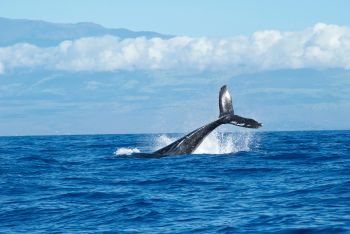
This is particularly evident when looking at marine life. Whale migration patterns, for example, shift continuously in response to seasonality, ocean temperatures, prey distribution and other environmental changes. Measures tied to specific locations or time periods can quickly become outdated, with areas designated as “low risk” under certain conditions becoming high risk in a short space of time.
With global shipping volumes expected to triple by 2050, it’s clear that many of the challenges facing the blue economy are too complex and fast-moving to be addressed through reactive approaches alone.
Reframing ocean management through AI
This is where agentic AI can provide a solution by supporting a transition to continuous monitoring and more informed decision-making. Unlike traditional AI systems that simply analyse information, agentic AI can interpret data and make decisions to act on it autonomously in real time. That matters in the blue economy, where conditions constantly change and operational decisions often need to be made dynamically across vast, fast-moving environments to prevent disruption before it happens, rather than responding after the damage is done.
A practical example of this is the use of agentic AI to predict whale movements and reduce vessel strikes. By combining multiple signals into a single, continuously updated AI-orchestrated risk map, these methods can provide a clearer picture of where collisions are most likely. Inputs such as seasonal habitat data, traffic data and ocean conditions, alongside environmental factors like temperature, can be used to assign real-time risk scores to specific regions.
This allows operators to adjust routes or speeds in advance, significantly reducing the probability of collisions. Crucially, these systems deliver actionable insights before vessels enter high-risk zones, rather than relying on retrospective post-incident analysis. This illustrates how AI can be deployed not only to understand risk, but to act on it in proactive and practical ways.
Connecting risk across the blue economy

Shipping, ports, offshore energy, and environmental stakeholders all operate within the same ocean environment, yet have historically lacked a shared, real-time understanding of risk. By creating a continuously updated, AI-led view of ocean conditions and activity, agentic systems can improve coordination across industries, helping organisations act earlier and with greater clarity.
This approach points to a broader opportunity for AI-powered decision-making across the blue economy. In shipping, AI is increasingly being used to combine market trends, conditions and operational data to support vessel development and chartering decisions. These systems highlight how real-time, data-driven intelligence could help organisations navigate complex operational, commercial and environmental challenges more effectively.
The case for shared data and collaboration
Open innovation will play an important role here. Sharing AI models, insights, and best practices can accelerate progress across the industry, helping organisations adopt and scale new technologies more quickly and effectively. Greater collaboration between shipping, energy, ports and environmental stakeholders will also be essential to building more resilient and sustainable ecosystems, where economic growth and environmental stewardship are not treated as competing priorities, but as interconnected goals.
Data and AI have a central role to play in helping stakeholders successfully meet the complex responsibility of protecting our marine ecosystems. The long-term goal is to create a system where the right information reaches decision-makers in time to act, enabling economic activity and environmental sustainability to coexist across the blue economy.
Cognizant is among leading organisations from across the worlds of technology, engineering and data announced as sponsors for Northumbrian Water’s tenth Innovation Festival.
The global data company will be looking at using nature-based solutions to make better environmental decisions and sharing data across the sector.
 Enpure Ltd and Clean TeQ Water Ltd have announced a collaboration agreement to bring Clean TeQ Water's Moving Bed Ion Exchange-based nutrient removal technologies to water utilities across the UK.
 Near-real-time microbial monitoring of wastewater discharge and bathing waters is now possible thanks to the BactoSense ID solution created by Swiss-based bNovate Technologies.
 ABB has launched AquaMaster+™, a digital platform for smart water network management, designed to help water utilities monitor, analyze and manage their water networks, preventing pipeline water losses and optimizing operations.
 Craig Nienaber, Business Development Manager for Safe Access Solutions (SAS) at HUBER Technology, explores why the company is seeing a growing level of interest in its safe access solutions for critical infrastructure providers, including their application in wastewater treatment assets.

 Southern Water has released film and images showing what it’s like to walk inside Hampshire’s expanded Yew Hill underground reservoir for the very last time, before it gets filled with water.
 Hear how Scottish Water has completed its £235 million Ayrshire Glasgow Resilience Project - customers across Greater Glasgow, Ayrshire and East Renfrewshire will now benefit from a more secure and resilient water supply.
 Hear how United Utilities is accelerating its investment to reduce spills from storm overflows across the Northwest.