

UK water industry regulator Ofwat has published a new discussion paper which examines whether upstream catchment management can deliver a better deal both for water customers and the environment.
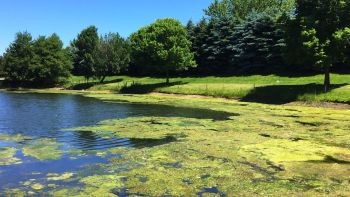
Diffuse pollution is one of the biggest challenges to improving water quality in England and Wales. Diffuse pollution occurs when small amounts of pollutants – often from many different sources – are washed into a water catchment across a wide area.
UK water companies are currently using a variety of approaches to prevent or reduce the amount of diffuse or other pollution entering water catchments. Early results from several of the companies suggest that some of their catchment management schemes are beginning to deliver benefits for customers.
However, across England and Wales there is not yet enough evidence overall to show that catchment management schemes deliver better water quality and lower treatment costs i.e. benefits that will hold down the bills that customers would otherwise have to pay.
Evidence base needed before 2014 price review
In the run up to the next price review, the regulator says the water companies must build the evidence base to show the effectiveness and benefits of particular catchment management techniques.
Ofwat’s focus report describes some of the catchment management approaches companies are trialling to prevent or reduce diffuse pollution and the issues that need addressing in order for customers to benefit from them.
On their own, the sources of this pollution can be relatively minor. But taken together, they can significantly affect the quality of the untreated water in individual catchments – and damage the wildlife and plants they support.
Upstream catchment management schemes could be a more sustainable way of helping to ensure good quality drinking water by tackling diffuse pollution at source before it reaches a water treatment works. They may also help the companies to find more cost-effective ways of meeting their environmental obligations.
In the past, the companies and their customers have paid for intensive treatment processes to deliver good quality drinking water once water has been taken from the environment. Once this water has been used, it must likewise be treated to remove pollutants before it is returned to the environment, which customers again have to pay for.
Ofwat says that continuing to use such approaches would be very costly and could also damage the environment. However, Ofwat said much work still needed to be done by the companies and other stakeholders before the review in 2014 when decisions must be taken on which new schemes customers will fund – and which existing schemes they will continue to pay for.
 Albion Water, the first NAV (New Appointment & Variation) to have been established in1999 and now under the ownership of SDS Water Group, has appointed Andy Holland as its new Director of Business Development.
 UK water companies are invited to join an upcoming webinar which will explore how the sector can take indirect potable reuse (IPR) from concept to full-scale operational reality.
 James Sumsion, CEO of predictive water intelligence specialists Kohtari, says the water sector needs to take a giant leap forward, so that it can anticipate and act upon water quality issues - rather than merely react.
 Ray Moulds, Sales Director at Flood Control International, takes a look at how automated sliding floodgates are supporting secondary containment at water and sewerage company sites.

 Hear how Scottish Water has completed its £235 million Ayrshire Glasgow Resilience Project - customers across Greater Glasgow, Ayrshire and East Renfrewshire will now benefit from a more secure and resilient water supply.
 Hear how United Utilities is accelerating its investment to reduce spills from storm overflows across the Northwest.
 Find out more about the remarkable career opportunities on offer at WSP - scroll down to watch the inspirational video.