
Thames Water and The Standard launch six part series podcast on River Thames
 A new podcast series dives into the health of our rivers, produced by The Standard in association with Thames Water.
Water industry views sought to shape next workforce report 2026
 Murray McIntosh is launching the 2026 edition of its influential Water Industry Labour Report, calling on professionals across the sector to share their experiences and help shape the future of workforce strategy.
CCW - new research reveals 6.8% of households in England and Wales faced water poverty in 2024/25
 A new research study has found that 6.8% of households in England and Wales faced water poverty in 2024/25 – based on the 5% water poverty measure.
Jersey Water welcomes Independent PFAS Scientific Advisory Panel Final Report - but warns over scale of investment required
 Jersey Water has welcomed the publication of the Independent PFAS Scientific Advisory’s Panel’s Final Report 4 by the Government of Jersey and the “clear direction“ that Jersey needs a framework for managing PFAS Island-wide.
Scotland – more areas move into water scarcity as prolonged dry weather continues
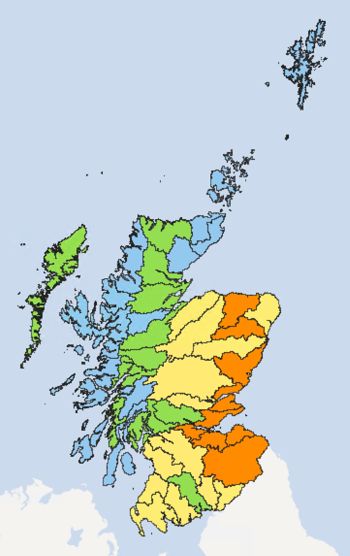 More parts of Scotland have moved into water scarcity following another week of exceptionally dry weather, with several areas now close to Significant Scarcity.
Rcord dry conditions trigger drought declaration for North Wales and Upper Severn
 Widespread wildfires, record-low river flows and the mounting impacts of successive heatwaves on the environment have triggered the declaration of drought status in North Wales and the Upper Severn, Natural Resources Wales (NRW) confirmed yesterday.
Scottish Water CEO Alex Plant - IWA 2026 conference is chance to accelerate solutions that deliver real impact
 Scottish Water CEO Alex Plant discusses why the forthcoming IWA World Water Congress & Exhibition IWA 2026 in Glasgow matters and why it is a chance not just to talk about the challenges facing water, but to accelerate solutions that deliver real impact.
Water Innovation Fund’s second Water Discovery Challenge names twenty innovative projects as finalists
 The Water Innovation Fund has named twenty innovative projects as finalists in the second Water Discovery Challenge, with projects ranging from microscopic insects capable of cleaning wastewater, to imagery taken from space to detect problematic toxins before they enter waterways, and smart batteries to prevent sewage spills.
Environment Agency takes action to maintain River Severn levels
 The Environment Agency is taking action to protect water supplies and wildlife in the Midlands as dry weather continues to place pressure on river levels.
National Drought Group steps up response after third heatwave as some areas move closer to drought status
 The National Drought Group is stepping up its response after the third heatwave as parts of southern, central, and eastern England move closer to drought status.
News Showcase
-
Uniwater strengthens its UK presence with acquisition of Hy‑Ram Engineering
 Uniwater has acquired Hy-Ram Engineering, a specialist in tooling, products and hire for the water sector, based in Mansfield, England.
 -
Enpure Ltd and Clean TeQ Water Ltd in new collaboration for Moving Bed Ion Exchange-based nutrient removal
 Enpure Ltd and Clean TeQ Water Ltd have announced a collaboration agreement to bring Clean TeQ Water's Moving Bed Ion Exchange-based nutrient removal technologies to water utilities across the UK.
 -
BactoSense ID cuts wastewater and bathing water bacteria testing from days to minutes
 Near-real-time microbial monitoring of wastewater discharge and bathing waters is now possible thanks to the BactoSense ID solution created by Swiss-based bNovate Technologies.
 -
ABB launches digital platform for optimizing operation of water networks
 ABB has launched AquaMaster+™, a digital platform for smart water network management, designed to help water utilities monitor, analyze and manage their water networks, preventing pipeline water losses and optimizing operations.
Expert Focus


News Sections
Other Latest News
- Severn Trent Chief Financial Officer to take up new role as Chief Financial Officer of Vistry Plc
- RSE and Mott MacDonald sign Memorandum of Understanding
- Thames Water awards contracts for £4.8 billion for AMP8/9 Major Projects Framework
- SW Water - Drought Programme Director says urgent action from customers and businesses is now essential
- M Group starts work on two water mains upgrades for Yorkshire Water
- Northumbrian Water - £100m+ River Wear protection investment reaches new milestone
Watch
-
Southern Water showcases last footage inside Yew Hill Reservoir before filling
 Southern Water has released film and images showing what it’s like to walk inside Hampshire’s expanded Yew Hill underground reservoir for the very last time, before it gets filled with water.
 -
Scottish Water completes £235m investment in two-way connection between drinking water networks
 Hear how Scottish Water has completed its £235 million Ayrshire Glasgow Resilience Project - customers across Greater Glasgow, Ayrshire and East Renfrewshire will now benefit from a more secure and resilient water supply.
 -
United Utilities accelerates investment to reduce spills from storm overflows across Northwest
 Hear how United Utilities is accelerating its investment to reduce spills from storm overflows across the Northwest.
Top Stories
Login / Register
New Account Registrations
To register for a new account with Waterbriefing, please contact us via email at waterbriefing@imsbis.org
Existing waterbriefing users - log into the new website using your original username and the new password 'waterbriefing'. You can then change your password once logged in.