
Environment Agency calls for people in Lincolnshire to sign up for free flood warnings
 Environment Agency teams are asking people living along the River Witham, a river which runs almost entirely in Lincolnshire in the east of England, to sign up for flood warnings as excess water is discharged out to sea.
IPCC warns no place on earth will be spared impacts of climate change
 The UN’s Intergovernmental Panel on Climate Change (IPPC) is warning that no place on earth will be spared the impacts of climate change as ice melts in the planet’s frozen regions, oceans warm and sea levels rise.
New study links climate change to major changes in flooding across Europe
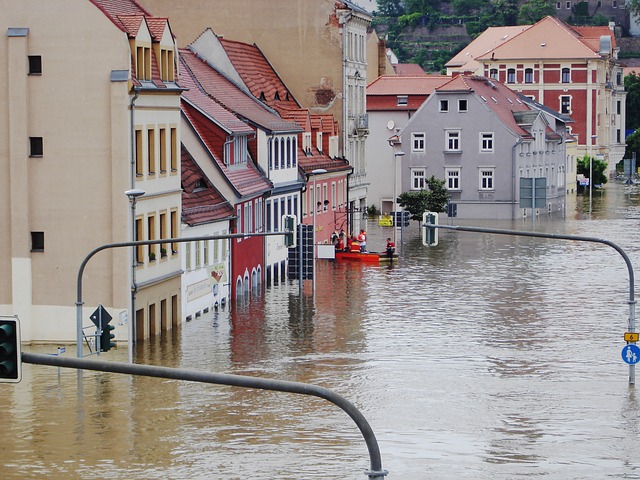 The impact of a changing climate on the severity of flooding has been demonstrated in the largest-scale study of its kind – with parts of northern Britain seeing the largest increase in Europe.
WMO warns as climate change accelerates - record GHG concentrations mean further warming
 The tell-tale signs and impacts of climate change – such as sea level rise, ice loss and extreme weather – increased during 2015-2019, which is set to be the warmest five-year period on record, according to the World Meteorological Organization (WMO).
Met Office - UK’s top ten hottest years all since 2002
 An updated analysis of the annual UK temperature records from the Met Office shows that since 1884 all of the UK’s ten warmest years have occurred since 2002 – in contrast, none of the ten coldest years have occurred since 1963.
EA Chief warns of profound and potentially terminal consequences of climate change impacts
 Environment Agency Chief Sir James Bevan is warning that unless we tackle the impacts of climate change, "they will have profound and potentially terminal consequences for everything that matters to us", in the newly published EA's Annual Report and Accounts for 2018-2019.
Climate change - CCC warns UK credibility depends on Government ramping up action
 The Committee on Climate Change (CCC) is warning that the UK’s credibility on climate change rests on Government action over next 18 months.
New report says local insurance protection model helps communities recover from natural disasters
 A new study from the University of Cambridge Institute for Sustainability Leadership (CISL) has, for the first time, analysed how mutual microinsurance, a community-owned model of insurance, contributes to the recovery outcomes of low income households following a natural disaster.
Microsoft & PWc report says AI can help to tackle global water crisis
 A new report from Microsoft and PWc on what can AI do for the economy and environment is highlighting the potential for Artificial Intelligence technologies to have a significant positive impact on the global water crisis by 2030.
Environment Agency Chief says we can turn climate change emergency into opportunity
 Environment Agency Chief Sir James Bevan has said that while climate change brings “fearsome risks” it also brings huge opportunities and we can tackle climate change successfully if we get our response right.