

Thames Water yesterday described last week’s flood at Farringdon station as a ‘learning point’.
At a meeting of the London Assembly’s Environment Committee, Richard Aylard, External Affairs and Sustainability Director for Thames Water explained that the company has a protocol in place with London Underground and that a similar principle with Network Rail should be set up.
He said; “With London Underground we have a seepage protocol. There should be a similar principle with Network Rail - as clearly we need it.”
The burst pipe at Farringdon was explored as part of a wider discussion addressing issues such as leakage reduction and pipe maintenance. The expected increase in water bills due to the development of the ‘super sewer’ - the Thames Tideway Tunnel - metering in the Capital and ensuring water supply meets demand for London’s growing population, were also discussed.
Stephen Knight AM, Chair of the Environment Committee said;
“The Assembly plays an important role in investigating issues that affect Londoners and we know that many were left frustrated and out of pocket following the Farringdon flood. We learnt today the cost of building the ‘super sewer’ is predicted to be around £34 per Londoner, per year, by 2020. We will continue to monitor such projects because Londoners should not have to foot additional bills if problems arise.”
Richard Aylard also told the Committee that Thames Water was "pushing hard" for a national policy statement by the Government for water, saying that a national policy would give a boost to the sector to get infrastructure and resource projects “fast-tracked” through the planning system.
Click here to watch the full webcast of the meeting.
 Craig Nienaber, Business Development Manager for Safe Access Solutions (SAS) at HUBER Technology, explores why the company is seeing a growing level of interest in its safe access solutions for critical infrastructure providers, including their application in wastewater treatment assets.
 Albion Water, the first NAV (New Appointment & Variation) to have been established in1999 and now under the ownership of SDS Water Group, has appointed Andy Holland as its new Director of Business Development.
 UK water companies are invited to join an upcoming webinar which will explore how the sector can take indirect potable reuse (IPR) from concept to full-scale operational reality.
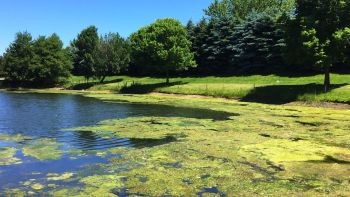 James Sumsion, CEO of predictive water intelligence specialists Kohtari, says the water sector needs to take a giant leap forward, so that it can anticipate and act upon water quality issues - rather than merely react.

 Hear how Scottish Water has completed its £235 million Ayrshire Glasgow Resilience Project - customers across Greater Glasgow, Ayrshire and East Renfrewshire will now benefit from a more secure and resilient water supply.
 Hear how United Utilities is accelerating its investment to reduce spills from storm overflows across the Northwest.
 Find out more about the remarkable career opportunities on offer at WSP - scroll down to watch the inspirational video.