

Steve Robertson, Thames Water’s chief executive, has said the firm is “paying a high price both financially and reputationally” for major pollution incidents that occurred between 2012 and 2014.
The comments come in his introduction to the water company’s’ newly-published corporate responsibility and sustainability (CR&S) report.
The report focuses on work completed during the last financial year (2016/2017), and features 55 case studies to provide a more detailed look at the company’s major projects.
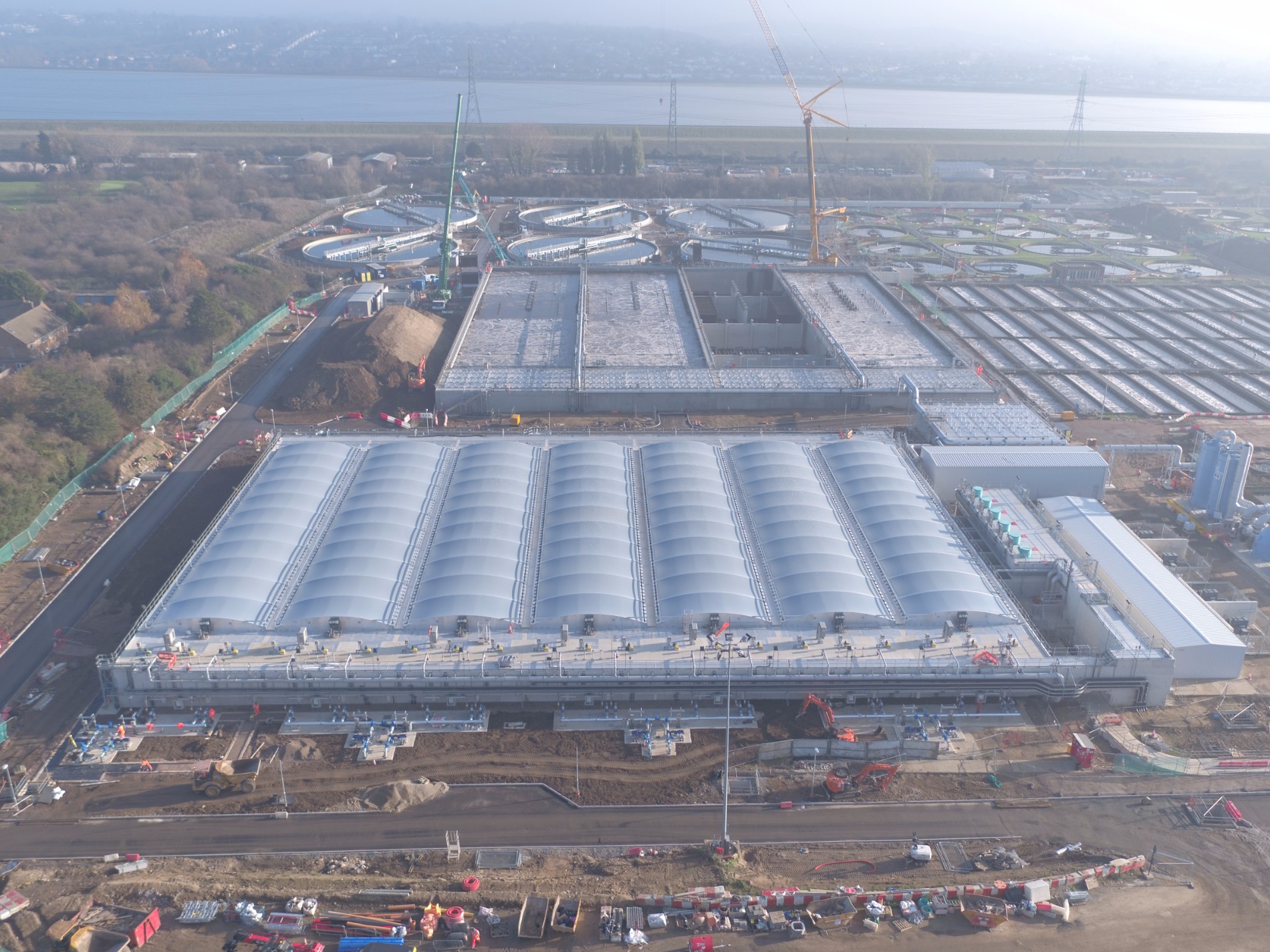 This year’s report includes case studies on the sustainable drainage scheme at the Nine Elms development in Vauxhall, London and the major £250m upgrade at Deephams sewage works.
The upgrade, which is transforming the 170-acre site by bringing it up to date in terms of output, energy generation and odour control, is being undertaken by AMK, the joint venture of AECOM, Murphy and Kier.
Thames has sought to ensure that the Deephams upgrade is truly sustainable and to consider the scheme’s environmental impact – even down to building new nest-boxes for the birds on site.
By reusing the original site and many of the original structures, the design reduces the need for waste to go to landfill. The earth removed while structures such as tanks were under construction has been kept on site to reduce lorry movements and, where possible, some elements of the new process have been constructed at factories off-site to reduce the need for concrete structures to be built.
Since the pollution events the utility chief referred to, Thames has put new procedures and personnel in place, and invested heavily in infrastructure, training and control systems, to limit the possibility of any similar events in the future. The firm has also committed significant funds to improve the river environment in the affected areas.
However, the last year has seen a series of major bursts on some of the larger Victorian water pipes, with devastating impacts on the households affected and traffic disruption over a wide area. The company has also missed its leakage target for the first time in a decade.
Steve Robertson commented in his introduction:
“I fully recognise that when things go wrong in this business we can have a devastating impact on our customers’ lives and on the environment.
“These failures are being taken seriously, additional investment has been committed and detailed recovery plans are in place. This is a huge priority for us and we will be keeping everyone up to date on our progress via our website and in the media.
“We are also paying a high price both financially and reputationally for major pollution incidents that occurred between 2012 and 2014.”
“I am not seeking to play down the significance of the failures I have just mentioned. But it is fair to point out that there is also some encouraging news, in important areas such as the increase in renewable energy generation, the reduction in sewer flooding, offering a ‘round the clock’ service on social media and innovating across the business in many ways which will improve service to customers, engage more strongly with communities and protect and enhance the environment.”
Click here to access Thames Water’s Corporate Responsibility and Sustainability (CR&S) Report 2016-17
 Enpure Ltd and Clean TeQ Water Ltd have announced a collaboration agreement to bring Clean TeQ Water's Moving Bed Ion Exchange-based nutrient removal technologies to water utilities across the UK.
 Near-real-time microbial monitoring of wastewater discharge and bathing waters is now possible thanks to the BactoSense ID solution created by Swiss-based bNovate Technologies.
 ABB has launched AquaMaster+™, a digital platform for smart water network management, designed to help water utilities monitor, analyze and manage their water networks, preventing pipeline water losses and optimizing operations.
 Craig Nienaber, Business Development Manager for Safe Access Solutions (SAS) at HUBER Technology, explores why the company is seeing a growing level of interest in its safe access solutions for critical infrastructure providers, including their application in wastewater treatment assets.

 Southern Water has released film and images showing what it’s like to walk inside Hampshire’s expanded Yew Hill underground reservoir for the very last time, before it gets filled with water.
 Hear how Scottish Water has completed its £235 million Ayrshire Glasgow Resilience Project - customers across Greater Glasgow, Ayrshire and East Renfrewshire will now benefit from a more secure and resilient water supply.
 Hear how United Utilities is accelerating its investment to reduce spills from storm overflows across the Northwest.