

South West Water is among 16 winning projects that have been awarded funding through the Ofwat Innovation Fund’s fifth Water Breakthrough Challenge, securing support for its innovative algal project.

The project, Prediction and Early Detection of Algal Blooms in Lakes and Reservoirs (PEDAL), will receive a share of more than £42 million awarded to initiatives that tackle major challenges in the water sector.
Working in close partnership with South West Water’s joint initiative with the University of Exeter, the Centre for Resilience in Environment, Water and Waste (CREWW), Plymouth Marine Laboratory, and other academic and industry collaborators, South West Water will lead the development of new tools to predict and manage harmful algal blooms before they grow.
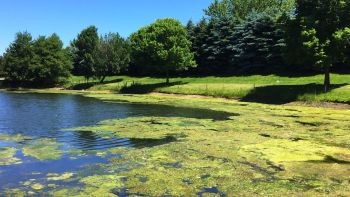
Harmful algal blooms (HABS) are a growing concern for water companies and communities across the UK. These naturally occurring events are caused by the rapid growth of algae in water and they are becoming more frequent due to climate change and pollution.
The blooms affect many parts of the UK from lakes to reservoirs by making water harder to treat, harming fish and wildlife, and reducing access to recreation.
South West Water’s PEDAL project will combine satellite images and drone technology with water quality data and input from local communities to build an early warning system for algal blooms.
Using artificial intelligence, the new system will help water companies to take action on HABS sooner which will improve water quality, protect nature and reduce treatment costs for customers.
The project is due to start in October 2025 and will take three years to complete.
Andrew Pennington, Innovation Programme & Partnerships Manager at South West Water, said:
“Algal blooms are a growing national challenge for the water industry, impacting water quality, biodiversity, and public enjoyment of natural spaces.
“With PEDAL, we aim to move from reacting to these events to mitigating their impact early on. This project will help us protect the environment, reduce treatment costs, and ensure reliable, high-quality water for our customers and we’re proud to be collaborating with our CREWW partners, Plymouth Marine Laboratory and other groups to achieve this.”
Professor Lisa Roberts, President and Vice-Chancellor of the University of Exeter commented:
“This project has the potential to develop pioneering new methods to predict and detect the onset of algal blooms in our water systems, to help experts take action before they affect both water quality and supply. It will help companies to continue to ensure safe, affordable water and protect our natural spaces and ecological health.”
 Craig Nienaber, Business Development Manager for Safe Access Solutions (SAS) at HUBER Technology, explores why the company is seeing a growing level of interest in its safe access solutions for critical infrastructure providers, including their application in wastewater treatment assets.
 Albion Water, the first NAV (New Appointment & Variation) to have been established in1999 and now under the ownership of SDS Water Group, has appointed Andy Holland as its new Director of Business Development.
 UK water companies are invited to join an upcoming webinar which will explore how the sector can take indirect potable reuse (IPR) from concept to full-scale operational reality.
 James Sumsion, CEO of predictive water intelligence specialists Kohtari, says the water sector needs to take a giant leap forward, so that it can anticipate and act upon water quality issues - rather than merely react.

 Southern Water has released film and images showing what it’s like to walk inside Hampshire’s expanded Yew Hill underground reservoir for the very last time, before it gets filled with water.
 Hear how Scottish Water has completed its £235 million Ayrshire Glasgow Resilience Project - customers across Greater Glasgow, Ayrshire and East Renfrewshire will now benefit from a more secure and resilient water supply.
 Hear how United Utilities is accelerating its investment to reduce spills from storm overflows across the Northwest.