

Thames Water CEO Chris Weston says the company has made good progress across all areas of its operational transformation and financial performance has improved, according to its interim half year results for the six months to 30 September 2025 published today.

Chris Weston introduced his Chief Executive Officer’s Review in the interm report by saying:
“When I started in January 2024, we had a negative return on equity and an uninvestible proposition. The company had been destabilised by high turnover in senior management and poorly executed outsourcing which had led to a loss of core capability and technical understanding of our assets and operations.
“Operational discipline had been lost and there was no effective or robust capital delivery process. Performance had been hampered by repeated cost cutting, and a financially constrained balance sheet, exacerbated by an unforgiving regulatory environment; all of which led to the need for the material turnaround and recapitalisation the company is now going through.”
Higher customer bills have led to a rise in customer complaints

Commenting on the company’s performance over the first six months of AMP8, he goes on to say:
“The first half of this year has been shaped by good progress across all areas of our operational transformation. We saw a 20% drop in pollutions and leakage performance is holding steady despite the extremely dry summer.
“Financial performance has improved with strong revenue growth, driven by the regulated price rise, good operational expenditure control, resulting in material EBITDA growth.
“We know our infrastructure requires significant investment, and that is why we have launched our Biggest Upgrade in over 150 years to improve our assets and consequently service to our customers and the environment.
“In the first six months of this financial year, we have increased capital investment by 22% to £1.3 billion compared with the same period last year.
“This investment has been funded by higher customer bills, which in turn have led to a rise in customer complaints. In response, we have increased the number of households on our social tariffs to 515,348 and launched a successful pilot that automatically enrols customers in London in financial difficulty for assistance they are entitled to, even if they are unaware of their eligibility.
“This progress has all been achieved as we also manage the recapitalisation of the business. We continue to work closely with stakeholders to secure a market-led solution that we believe is in the best interests of our customers and the environment."
However, he goes on to warn that the transformation required is significant, and will take at least a decade to complete.
Recapitalisation and financial resilience
Commenting on its current financial situation, Thames says there has been significant progress in underlying performance with revenue, EBITDA and operating cashflow all up compared to last year. However, its balance sheet remains weak, “hence the focus on recapitalising the business.”
The company’s creditors have continued to provide liquidity while the process to agree the terms of recapitalisation with government and regulators is ongoing.
As at 30 September 2025, Thames had drawn £1.43 billion of its £1.5 billion super senior facility, with £872 million on-lent to TWUL.
On 2 October 2025, London & Valley Water (L&VW), a large consortium of Class A Creditors, announced the submission of its proposal to the company and Ofwat to deliver the turnaround, transformation and recapitalisation of Thames Water without recourse to taxpayers.
Since this submission there have been ongoing discussions between the company, L&VW and Ofwat designed to agree a business plan and capital structure that delivers the required recapitalisation and is “supported by a regulatory framework that supports the turnaround of the company in a way that meets the needs of all regulators and investors and delivers on our commitments to customers and the environment.
Longer-term, progress requires regulatory reform.”
Key operational highlights

Photo: Thames Water QEII reservoir with floating solar panels
Key operational highlights Thames is flagging up in the report include:
- Significant acceleration in the capital programme in the first half of 2025-26 with £1,260 million of capital invested. Up 22% year-on-year, with investment focused on fixing leaks, pollution and water quality.
- Lost time injuries disappointing in the first two months of the financial year with an improvement since then (HY26: 27; HY25: 20).
- Compliance Risk Index (CRI), good progress but missed target after a single failure at one of its largest sites (Jan-Sep 25: 3.70; Jan-Sep 24: 1.86). Excluding this, performance would be 1.30.
- Record first quarter performance for water supply interruptions (HY26: 4 minutes 42 seconds; HY25: 3 minutes 42 seconds), finishing within target despite drought conditions in second quarter leading to twice the usual bursts.
- Leakage reduction held steady despite the impact of the hottest summer since records began (Three-year rolling average for HY26: 584Ml/d, 13.3% decrease against 2019-20 baseline; HY25: 585 Ml/d, 13.1% decrease against 2019-20 baseline).
- 20% reduction in pollutions (category 1-3) (Jan-Sep 25: 292; Jan-Sep 24: 364) with 15% more blockages cleared compared to last year and pipe relining programme ahead of schedule.
- Complaints increased, driven by the price rise (HY26: 55,158: HY25: 31,600), however water and waste complaints dropped by 11%.
- At or above sector median performance in 8 of 12 common performance measures and among the top performers in sewer collapses, per capita consumption and leakage in Ofwat’s 2024-25 Company Performance Report despite overall ‘lagging’ rating.
- Rated one out of four stars in the Environment Agency’s 2024 Environmental Performance Assessment, predominantly due to its serious pollution performance and recognition that it was unable to deliver all of WINEP7 in AMP7.
- 27% of energy needs were covered by self-generated renewable energy by Thames on its sites (HY25: 24.5%).
- Smart meter installation programme more than doubled in size year-on-year (HY26: 129,082; HY25: 60,984)
- London Tideway Tunnel Network diverted nearly 3 million cubic metres of sewage from spilling into the River Thames between April and September 2025
- £133 million in affordability support provided in the first half of 2025-26 (HY25: £67 million) and becoming the first water company to automatically enrol customers onto social tariffs, taking the total to 515,348 households.
Financial performance
Underlying revenue was up 42% to £1.9 billion, primarily driven by the regulatory uplift in water and wastewater tariffs, enabling the investment necessary to improve our asset resilience, environmental performance and customer experience.
Underlying EBITDA rose 69% to £1.2 billion, primarily due to the increase in revenue – attributed to tight control of operating costs as Thames executes the transformation of the business and focus on its priorities.
Reported profit after tax of £328 million compares with a loss after tax of £190 million in the prior period, driven by the increase in underlying EBITDA combined with significantly lower exceptional costs which together more than offset lower finance income, higher interest costs on debt and fair value losses on financial instruments.
Capital investment was up 22% at £1.3 billion over the prior period, driven by the planned step up in investment in the AMP8 Programme.
Liquidity reduced by 44% to £0.9 billion at 30 September 2025, primarily driven by capital investment.
Senior gearing increased to 85.9% at 30 September 2025, up 1.5 percentage points since 31 March 2025.
Statutory net debt has increased by 5% to £17.6 billion as at the end of the period since 31 March 2025.
The path ahead - Thames Water restructuring
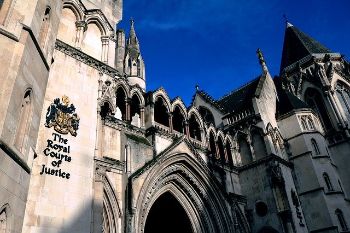
Chris Weston says in his Review that “discussions are taking longer than expected but this is a complex situation and the current phase of the restructuring plan will likely take a number of months to conclude.”
This phase will be followed by a restructuring process overseen by the Courts following which, if the process is successful, company’s balance sheet can be recapitalised.
"While negotiations are ongoing, we have agreed with Ofwat to further defer our request for a redetermination by the Competition and Markets Authority (CMA), although we retain this as an option in case our creditors are unable to reach agreement with government and regulators on an investible and financeable business plan."
 ABB has launched AquaMaster+™, a digital platform for smart water network management, designed to help water utilities monitor, analyze and manage their water networks, preventing pipeline water losses and optimizing operations.
 Craig Nienaber, Business Development Manager for Safe Access Solutions (SAS) at HUBER Technology, explores why the company is seeing a growing level of interest in its safe access solutions for critical infrastructure providers, including their application in wastewater treatment assets.
 Albion Water, the first NAV (New Appointment & Variation) to have been established in1999 and now under the ownership of SDS Water Group, has appointed Andy Holland as its new Director of Business Development.
 UK water companies are invited to join an upcoming webinar which will explore how the sector can take indirect potable reuse (IPR) from concept to full-scale operational reality.

 Southern Water has released film and images showing what it’s like to walk inside Hampshire’s expanded Yew Hill underground reservoir for the very last time, before it gets filled with water.
 Hear how Scottish Water has completed its £235 million Ayrshire Glasgow Resilience Project - customers across Greater Glasgow, Ayrshire and East Renfrewshire will now benefit from a more secure and resilient water supply.
 Hear how United Utilities is accelerating its investment to reduce spills from storm overflows across the Northwest.