

Following Monday’s debate in the House of Commons about public ownership of the water sector, the BBC, The Guardian and The Telegraph are reporting that new powers for mayors to control water companies via a number of regional boards are among a number of options that the Government is currently considering.
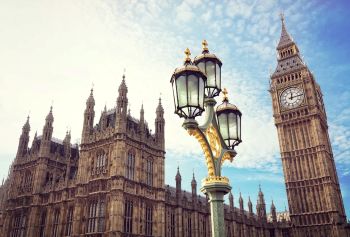
Led by Paul Davies MP, (Colne Valley) (Lab), this week’s debate saw MP after MP from all sides weigh in with their views on what were widely regarded on the failures of privatisation. Given the level of interest in the debate, which lasted for three hours, the speaker imposed a time limit of two and a half minutes for MPs to speak.
Unsurprisingly, the water companies came in for sharp criticism from MPs across the political divide on a wide range of issues, including customer bills, sewage discharges, investor dividends, executive bonuses, overseas ownership, water company debts and profits, trust in the water sector, affordability, water povertyand failures to invest in critical infrastructure.
While MP after MP called for public ownership of the water companies, others cautioned that it cannot be assumed that public ownership would resolve all the issues.
Paul Davies told MPs that the private model for water had been an economic, environmental and public health failure, saying it was “disappointing to learn that the Government did not even permit the Independent Water Commission to consider alternative ownership models, including whether public ownership was an option.” He pointed out that public ownership of water is “incredibly popular among the public” which they “overwhelmingly” backed.
“Despite its popularity and the strength of the case behind it, there has been a total failure from successive Governments to consider the merits of public ownership”, he said.
According to Davies, there are practical steps that the Government can take now - one option is for the Department for Environment, Food and Rural Affairs to conduct a feasibility study of alternative models to ensure that public ownership has been given due, fair and full consideration.
He went on to say that the Government “face a more imminent crisis with the likely collapse of Thames Water,” where there are several options, including a special administration regime (SAR).
“Although that is technically a temporary form of nationalisation, it would allow the Government to test the waters for more far-reaching reform,” he suggested. “Without an SAR water companies will know that, no matter how bad it gets, there is no real sanction. The credibility of the regulation will be fundamentally undermined.”
Commenting on the economic regulator, Martin Wrigley said it had been “clear for years” that Ofwat had not had “the teeth or the understanding” to avoid the water companies turning into “financial instruments dealing with very complex debt deals.”
"Constituents want clean rivers, reliable water, functioning sewerage infrastructure and value for money"

Gregory Stafford MP (Farnham and Bordon) (Con) told MPs:
“My constituents want clean rivers, reliable water, functioning sewerage infrastructure and value for money. What they want is not necessarily a change in the ownership of water companies, but proper regulation, proper investment and proper accountability.”
According to Manuela Perteghella (Stratford-on-Avon) (LD) a model of public ownership could be for the water companies to become mutually owned which would mean:
- greater accountability, with a focus on public benefit rather than shareholder profit;
- executive boards that include environmental experts and local citizens groups;
- greater investment in infrastructure, with any profits reinvested into the water system.
Public ownership would make it much easier to manage water collectively, as a social good rather than a commodity, she added, which would make solutions such as sustainable drainage systems, sponge cities and controlling pollution at source “not only feasible but easier to implement.”
Thames Water was among individual companies who came in for repeated criticism by MPs about problems in their own constituencies. However, for the most part they reserved their criticism for the senior teams and investors, acknowledging the performance of water company employees at an operational level.

Olly Glover MP (Didcot and Wantage) (LD) commented:
“Before I get into the usual damning of Thames Water, I want to put something on the record. However corporately dysfunctional Thames Water is, there are a lot of good people who work for it. I thank the frontline teams and their managers, who have engaged on issues such as the flooding on Ladygrove in Didcot and restoring Wallingford’s Mill brook, and who attended a flooding summit at East Hanney last year.”
He explained that Thames Water is operating with £23 billion of assets in urgent need of repair and close to £20 billion of debt, which it has said it cannot repay—a third of customers’ bills are spent servicing that debt.
Olly Glover MP - "unclear how Thames Water is right organisation responsible for delivering proposed White Horse reservoir"
“In that context, it is unclear how Thames Water is the right organisation to be responsible for delivering the proposed White Horse reservoir, the estimated costs for which have already increased from £2.2 billion to £7.5 billion,” he warned.
He told the House that instead of nationalisation, the Liberal Democrats are calling for water companies to become mutually owned public benefit corporations -o wned by customers, professionally managed and not driven by shareholder profit - with effective regulation.
Barry Gardiner MP (Brent West) (Lab) was forthright in his rejection of a referendum to bring the water industry back into public ownership, saying “I just want Ministers to get on and do it” and pointing out that the Secretary of State has the power under the Water Industry Act 1991 to petition the High Court for any water company to lose its licence for either poor performance or insolvency.
With reference to Thames Water, he emphasised:
“The Secretary of State can apply to put a company into a special administration regime if it has contravened, or is likely to contravene, any principal duty. They have; she should….
“For goodness’ sake, we do not need a referendum. We need a Secretary of State who is prepared to use the legislation that was provided for the purpose of defending the public.”
Rebecca Long Bailey MP (Salford) (Lab) said that while water companies had been fined millions of pounds, it had “demonstrably failed to change their behaviour” and that “chronic underfunding of the Environment Agency and failures by Ofwat” had meant that even the limited regulatory powers available had too often gone unenforced.
However, she warned:
“Public ownership has to mean much more than putting a Government sign above the door. Public control cannot mean just some sort of franchise model with the pretence of overarching Government control, or the odd token councillor sitting on a water company board. That will solve nothing.”
MPs were in general agreement that there should be a culture of accountability to the wider public, not just to shareholders.
"We are now obliged to pay for the same infrastructure investment all over again through higher bills"

John Milne MP (Horsham) (LD) flagged up the failure of previous governments, placing the blame squarely on failures of privatisation by Conservative administrations and subsequent underfunding of regulators which had prevented them from doing their job. In his view, billions had been extracted from the industry “in excess profits” - but in most cases the money cannot be recovered because the “original investors sold out long ago.”
“Painful as it is, we are now obliged to pay for the same infrastructure investment all over again through higher bills,” he said.
MP after MP weighed in with criticism of private investors, with Richard Quigley MP (Isle of Wight West) (Lab) suggesting that “private equity has become so effective at fearmongering that Governments of all colours are reluctant to challenge the status quo."
Bambos Charalambous MP (Southgate and Wood Green) (Lab) added:
“….tougher regulation is not enough to deal with a model that is fundamentally broken. Thames Water is in approximately £19 billion of debt, but the rescue deal on the table is a market-led recapitalisation by its creditors that will keep the failing private ownership model intact in exchange for environmental leniency.
“Bringing Thames Water into public ownership, either permanently or initially through a special administration regime, would allow the Government to write down debt on fairer terms than any creditor-led deal and to direct further revenue toward infrastructure and customers, rather than debt servicing and returns to shareholders.”
Pointing out that England and Wales are the only countries in the world to have fully privatised their water and sewerage systems, Richard Burgon MP (Leeds East) (Lab) said:
“We are the odd ones out, and something needs to be done about it.”
According to Dr Roz Savage MP (South Cotswolds) (LD), the promise of privatisation was that private capital would bring investments and efficiency. However, research from the University of Greenwich had estimated that between 1991 and 2023, “shareholders extracted around £85 billion more from English water and sewerage companies than they actually contributed in new equity.”
She asked the Minister for three further commitments:
- ban bonuses until spills end and leaks are fixed;
- introduce a three-year cooling-off period before the new regulator can employ people from the industry it regulates;
- creation of a single social tariff so that nobody is priced out of the water that they cannot do without.

Closing the debate, Emma Hardy, Minister of State, at the Department for Environment, Food and Rural Affairs said:
“We are working through things across Government, and are looking to introduce a Bill that meets that appetite for change….
“We are looking at all of the sector and what can be done right across it. The Prime Minister has been absolutely clear, in all the comments he has made, that, in his words, the current water sector is “a leaking monument” to a system that prioritises private over public.
“I want to move towards a better system, in which we are thinking about the management of water in a catchment - about water, flooding, wetlands and nature, and how we can do all that together….
To do that, we need significant reform to give people and places greater control and to make the industry work for them again….
“Whatever the ownership model, we face a challenge around ageing infrastructure. We need major investment. The provision of basic services and the prevention of sewage spills is a fundamental requirement of the sector. Some 30 years of privatisation has not left the system in a good state, and that is probably an understatement...
“There is no single easy fix, but the Prime Minister has been very clear that the failures of the past cannot continue. We will look at all possible solutions for the water industry and bring forward reforms to make the sector work for people and places again….
“We can never forget that the workers on the frontline are not responsible for the failures of the water companies. I have absolute respect for them. ….I pay wholehearted tribute to the trade unionists and workers in all those water companies, who are doing a great job in incredibly difficult situations.”
Burnham criticises centralisation of political power and economic privatisation

In his first speech in the House of Commons as Prime Minister on 1st September, Andy Burnham criticised centralisation of political power and economic privatisation, calling the water industry a “leaking monument” to the governing approach of “a country run in the private rather than the public interest”. He told MPS that the government would publish a “10 year plan for Britain” later in the year to “set out plans for stronger public control over these essentials, making them work for people and places again”.
Led by Sir Jon Cunliffe, The Independent Water Commission’s final report in July 2025 on the water sector included a recommendation for the establishment of nine new regional water authorities bringing together representation from local government, agriculture, public health, the environment and consumers.
The Burnham Labour Government has not yet made any public statements on ownership of the water sector. The Prime Minister will set out the definition of his proposal for “public control” of water and energy firms in the 10-year plan.
Click here to access the transcript of the full debate
 ABB has launched AquaMaster+™, a digital platform for smart water network management, designed to help water utilities monitor, analyze and manage their water networks, preventing pipeline water losses and optimizing operations.
 Craig Nienaber, Business Development Manager for Safe Access Solutions (SAS) at HUBER Technology, explores why the company is seeing a growing level of interest in its safe access solutions for critical infrastructure providers, including their application in wastewater treatment assets.
 Albion Water, the first NAV (New Appointment & Variation) to have been established in1999 and now under the ownership of SDS Water Group, has appointed Andy Holland as its new Director of Business Development.
 UK water companies are invited to join an upcoming webinar which will explore how the sector can take indirect potable reuse (IPR) from concept to full-scale operational reality.

 Southern Water has released film and images showing what it’s like to walk inside Hampshire’s expanded Yew Hill underground reservoir for the very last time, before it gets filled with water.
 Hear how Scottish Water has completed its £235 million Ayrshire Glasgow Resilience Project - customers across Greater Glasgow, Ayrshire and East Renfrewshire will now benefit from a more secure and resilient water supply.
 Hear how United Utilities is accelerating its investment to reduce spills from storm overflows across the Northwest.