

Images released by Arup engineers for the first time reveals the future potential of 3D printing for the construction and manufacturing sectors.
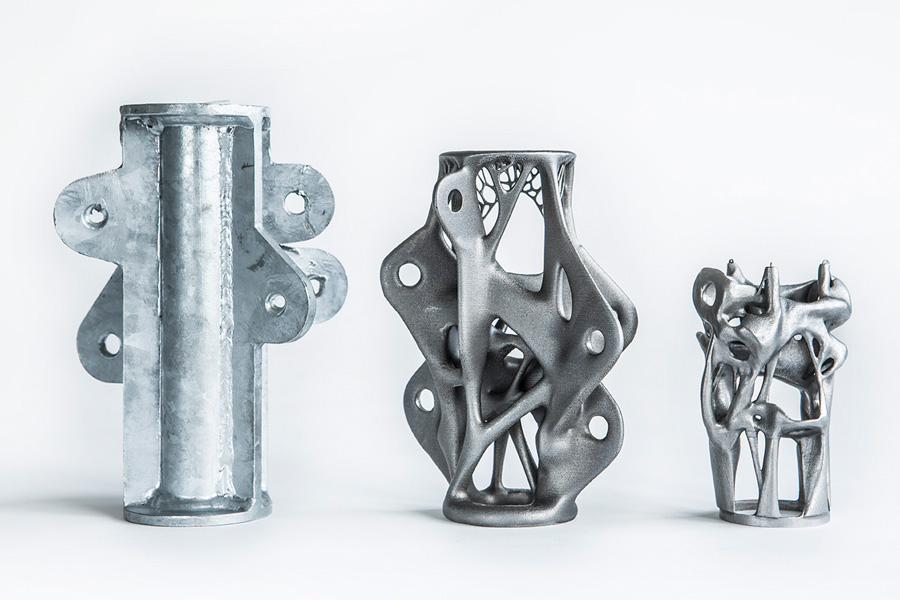 The image graphically illustrates how 3D printing – more accurately known as additive manufacturing – can enhance the design and production process to the point that the weight and resulting cost of future construction materials could be reduced significantly.
The three structural elements shown are all designed to carry the same structural loads and forces. The difference is that the far smaller item on the right is designed using the very latest optimisation and manufacturing methods applied by Arup.
Salomé Galjaard, Team Leader at Arup commented:
"This is not only an exciting development for the construction sector, but many other industries as well. In the case of this particular piece, the height is approximately half that of one designed for traditional production methods, while the direct weight reduction per node is 75%.
“On a construction project that means we could be looking at an overall weight reduction of the total structure of more than 40%. But the really exciting part is that this technique can potentially be applied to any industry that uses complex, high quality, metal products."
The additive manufacturing approach means that manufacturers can create highly complex, individually designed pieces and print them directly in metal. This in itself has tremendous implications for reducing costs and cutting waste. The latest advances in the design techniques explored by Galjaard’s team mean that far smaller, lighter elements can deliver the same function and strength as those created by traditional methods.
 Albion Water, the first NAV (New Appointment & Variation) to have been established in1999 and now under the ownership of SDS Water Group, has appointed Andy Holland as its new Director of Business Development.
 UK water companies are invited to join an upcoming webinar which will explore how the sector can take indirect potable reuse (IPR) from concept to full-scale operational reality.
 James Sumsion, CEO of predictive water intelligence specialists Kohtari, says the water sector needs to take a giant leap forward, so that it can anticipate and act upon water quality issues - rather than merely react.
 Ray Moulds, Sales Director at Flood Control International, takes a look at how automated sliding floodgates are supporting secondary containment at water and sewerage company sites.

 Hear how Scottish Water has completed its £235 million Ayrshire Glasgow Resilience Project - customers across Greater Glasgow, Ayrshire and East Renfrewshire will now benefit from a more secure and resilient water supply.
 Hear how United Utilities is accelerating its investment to reduce spills from storm overflows across the Northwest.
 Find out more about the remarkable career opportunities on offer at WSP - scroll down to watch the inspirational video.