

The Government has today confirmed that £1.2 billion of funding is being made available to develop a state-of-the-art supercomputer, meaning that predicting severe weather and the impacts of climate change will be faster and more accurate than ever before.

The latest supercomputing technology will unlease the full potential of weather and climate data for the UK and improve severe weather and climate forecasting, a Government statement said.
Data from the supercomputer, which will be managed by the Met Office, will be used to inform Government policy as part of leading the global fight against climate change and meeting net zero emission targets.
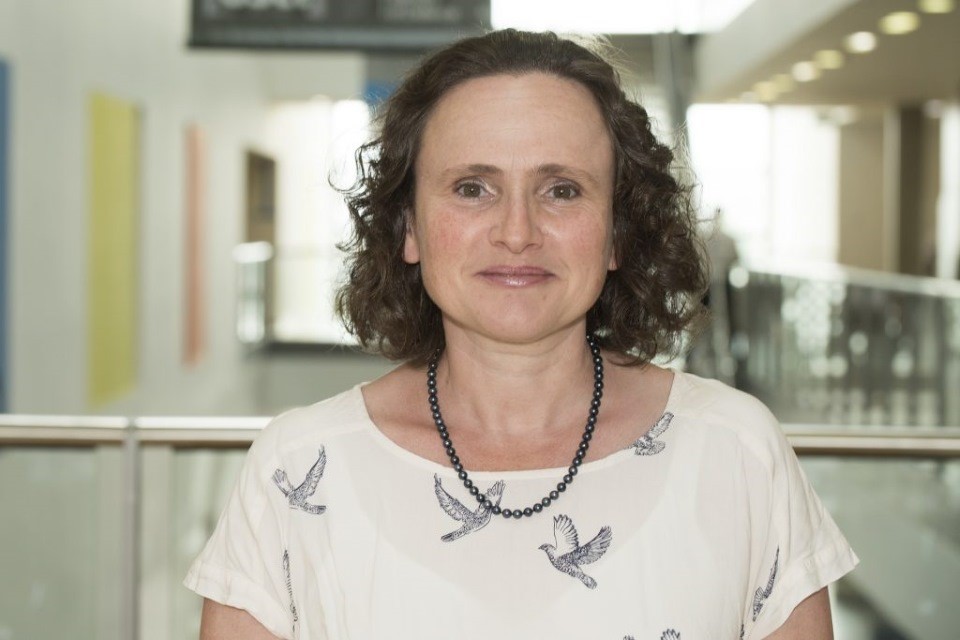 Professor Penny Endersby, Met Office Chief Executive commented:
“This investment will ultimately provide earlier more accurate warning of severe weather, the information needed to build a more resilient world in a changing climate and help support the transition to a low carbon economy across the UK.
“It will help the UK to continue to lead the field in weather and climate science and services, working collaboratively to ensure that the benefits of our work help government, the public and industry make better decisions to stay safe and thrive.
“We welcome this planned investment from UK Government.”
Data from the new supercomputer – expected to be the world’s most advanced dedicated to weather and climate – will be used to help more accurately predict storms, select the most suitable locations for flood defences and predict changes to the global climate.
The new supercomputer will also be used to help ensure communities can be better prepared for weather disruption, including through:
More sophisticated rainfall predictions, helping the Environment Agency rapidly deploy mobile flood defences
Better forecasting at airports so they can plan for potential disruption
More detailed information for the energy sector to help them mitigate against potential energy blackouts and surges
Announcing the funding, Business and Energy Secretary and COP26 President Alok Sharma said:
“Over the last 30 years, new technologies have meant more accurate weather forecasting, with storms being predicted up to five days in advance.
“Come rain or shine, our significant investment for a new supercomputer will further speed up weather predictions, helping people be more prepared for weather disruption from planning travel journeys to deploying flood defences.”
The new supercomputer will also strengthen the UK’s supercomputing and data technology capabilities, driving forward innovation and growing world-class skills across supercomputing, data science, machine learning and artificial intelligence.
The Met Office is at the forefront of supercomputing, using its current technology to drive advances in environmental forecasting.
As a result, detailed weather predictions for the UK now take place every hour instead of every three hours, providing crucial and timely updates when extreme weather is approaching.
The statement said the benefit of this has been felt recently: major storms Ciara and Dennis, and the ‘Beast from the East’ in 2018, were forecast five days in advance, enabling local councils and emergency services to prepare and instigate resilience plans.
Similarly, the Environment Agency has used the Met Office’s latest UK climate projections to set out potential future flooding scenarios and how funding can be best allocated.
Chair of the Science Review Group Professor Ted Shepherd added:
“The agreement to upgrade the Met Office high performance computer is welcome news. The improved processing power will deliver a step-change in weather forecasting and climate modelling capability for the UK, such as the further development of the Earth Systems Model, which involves collaboration with the many UKRI-NERC funded research centres.
“Improved daily to seasonal forecasts and longer-term climate projections will equip society with a greater ability to proactively protect itself against the adverse impacts of climate change.”
 Albion Water, the first NAV (New Appointment & Variation) to have been established in1999 and now under the ownership of SDS Water Group, has appointed Andy Holland as its new Director of Business Development.
 UK water companies are invited to join an upcoming webinar which will explore how the sector can take indirect potable reuse (IPR) from concept to full-scale operational reality.
 James Sumsion, CEO of predictive water intelligence specialists Kohtari, says the water sector needs to take a giant leap forward, so that it can anticipate and act upon water quality issues - rather than merely react.
 Ray Moulds, Sales Director at Flood Control International, takes a look at how automated sliding floodgates are supporting secondary containment at water and sewerage company sites.

 Hear how Scottish Water has completed its £235 million Ayrshire Glasgow Resilience Project - customers across Greater Glasgow, Ayrshire and East Renfrewshire will now benefit from a more secure and resilient water supply.
 Hear how United Utilities is accelerating its investment to reduce spills from storm overflows across the Northwest.
 Find out more about the remarkable career opportunities on offer at WSP - scroll down to watch the inspirational video.