

A leading supply chain expert is warning that innocent consumer “substitution” of products could create serious consequences for other supply chains that are critical to society and life.
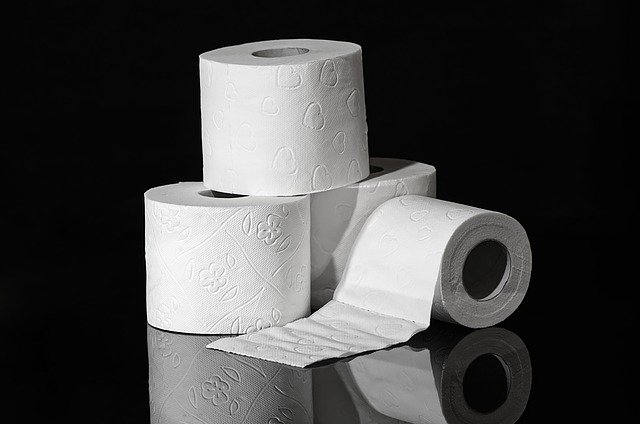
According to Professor Richard Wilding OBE, Professor of Supply Chain Strategy at Cranfield School of Management, problems could arise as a result of the panic buying of toilet paper and other tissue products. In his view, it is unlikely that consumers are considering the consequences of using alternative products for the tasks they were not designed for.
Professor Wilding commented:
“We are seeing shortages of toilet paper but worryingly also shortages of paper kitchen towels and industrial paper towel used for example, in garages and workshops and other wipe products.
“If kitchen towels, baby wipes or industrial papers are used as a replacement for toilet paper, our sewage systems could readily become blocked with the resulting chaos and increased health risks associated with this. Ultimately, water companies may not have the infrastructure and equipment to unblock the sewer system.”
He went on to warn of the impact of panic buying of other products as substitutes, for example dust masks. As shortages in pharmacies and chemists start to bite, consumers are reported to be turning to building hardware suppliers for face masks and body suits.
“This means builders, tilers and plasterers or other workers who regularly use masks for protection against airborne particulate matter, for instance, are struggling to get hold of this equipment from certain suppliers.”
“Yet the construction industry relies on this protective equipment for people to carry out their work – as employers, companies can’t expect their staff to continue without it and regulations place a duty of care on every employer to provide the appropriate safety equipment. Without such equipment employees are unable to work and companies are subsequently unable to undertake work. UK companies who supply these sectors are starting to feel the strain on certain protective equipment items and this needs to be monitored very carefully.”
“The issue where a seemingly unrelated supply chain channel causes disruption is known as a ‘supply chain parallel interaction’. In this case, the consumer supply of medical face masks is drying up, so customers turn to industry sources. Similarly, the substitution of kitchen towels for toilet paper will have a knock-on effect of disrupting the sewage treatment supply chain – causing shortages in their supply chain as a knock-on effect and a disrupting a seemingly unrelated industry."
Only toilet paper should go down the loo, says Thames Water
Yesterday Thames Water warned customers not to use kitchen towel as a substitute for toilet paper to help reduce the risk of sewer blockages during the COVID-19 pandemic. The company is reminding people not to flush wet wipes or kitchen roll down their toilets if they’re using them instead of toilet paper or simply want to get rid of used cleaning products from their homes.
Many shoppers have been bulk buying toilet roll a result of the pandemic, meaning others are struggling to get hold of what they need.
With the company, like all businesses, facing the potential for an increase in staff absence in the coming weeks, Thames Water has asked customers to help lighten the workload by being careful what they flush.
Matt Rimmer, Thames Water’s head of waste networks, said:
“We’re carefully planning how we can continue to provide an essential public service and while we encourage everyone to practice good hygiene to protect against COVID-19, wet wipes and kitchen roll can be hugely damaging to our sewers and our customers can really help us by not flushing them down the toilet.
“This will reduce the number of blockages and the risk of flooding to homes, businesses and the environment during what is likely to be a difficult time for many people.”
On average, Thames Water spends £18 million every year clearing 75,000 blockages from its sewers, unclogging five house blockages and removing 30 tonnes of material from just one of its sewage treatment works every day.
 Near-real-time microbial monitoring of wastewater discharge and bathing waters is now possible thanks to the BactoSense ID solution created by Swiss-based bNovate Technologies.
 ABB has launched AquaMaster+™, a digital platform for smart water network management, designed to help water utilities monitor, analyze and manage their water networks, preventing pipeline water losses and optimizing operations.
 Craig Nienaber, Business Development Manager for Safe Access Solutions (SAS) at HUBER Technology, explores why the company is seeing a growing level of interest in its safe access solutions for critical infrastructure providers, including their application in wastewater treatment assets.
 Albion Water, the first NAV (New Appointment & Variation) to have been established in1999 and now under the ownership of SDS Water Group, has appointed Andy Holland as its new Director of Business Development.

 Southern Water has released film and images showing what it’s like to walk inside Hampshire’s expanded Yew Hill underground reservoir for the very last time, before it gets filled with water.
 Hear how Scottish Water has completed its £235 million Ayrshire Glasgow Resilience Project - customers across Greater Glasgow, Ayrshire and East Renfrewshire will now benefit from a more secure and resilient water supply.
 Hear how United Utilities is accelerating its investment to reduce spills from storm overflows across the Northwest.