

The innovative awareness month and national campaign Unblocktober has been underway this month for a second year following its success in 2019.
More than 50 prominent organisations - including the UK’s leading utilities companies, the Environment Agency, Water UK, and the Marine Conservation Society – have officially partnered with the campaign to spread the word to over 1.5m people on social media.
Unblocktober, led by Lanes Group, has been challenging individuals and businesses to avoid putting fats, oils and grease (FOG), food, wet wipes and a range of other troublesome products down their drains for 31 consecutive days in October.
In a survey of participants conducted after the 2019 event, 86% reported that they were able to avoid putting FOG down their drains every single day during the initiative. 11% said they avoided it on most days. Some 92% stated they avoided flushing items containing ‘hidden plastics’ every day, with 8% doing so on most days.
In addition, participants’ awareness of what should and shouldn’t go down the drain increased since taking part in the initiative. Before Unblocktober, 67% said they were ‘very aware’ of what should and shouldn’t go down their drains, rising to 84% afterwards.
According to Unblocktober’s Naomi Wright, there has never been a more important time to look after our sewers and seas.
“The coronavirus crisis has taken a terrible toll on communities around the world, and unfortunately that damage has reached our sewage networks and rivers, lakes and seas too.
“With more people at home during the global lockdown, ‘coronavirus fatbergs’ have been forming at staggering rates across the world as a result of ‘unflushable’ items and substances being put down our drain on a much larger scale than ever before as a result of the toilet paper shortage.
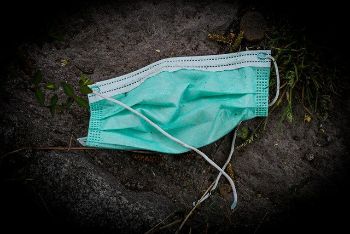
“Plastic pollution has risen too, with more single-use plastic and disposable PPE being used throughout the crisis, but often not being disposed of correctly.
“Fatbergs and plastic pollution were already two of the most critical environmental issues before lockdown, and sadly the situation has only worsened.
“It’s crucial we all take action now so that we can reverse the damage we’re causing to our environment.”
Yorkshire Water, one of the water companies partnering with the campaign, has also separately flagged up the findings of a recent national survey which asked more than 1,000 respondents about their toilet paper and wet wipe habits and revealed a generational split when it comes to flushing wipes.
It found people aged 35-44 are the worst culprits, with 32% admitting to flushing wet wipes. They were followed by those aged 25-34 (29%) and 45-54 age group (19%), while just 16% of 18-24s said they flush wipes.
Mark Hammond, head of customer field services commented:
“It is concerning to find that so many people are still flushing wet wipes down their toilets, despite our warning and information on packets not to do so.
“We spend millions of pounds every year on clearing blockages caused by items that should not be flushed – money which could be spent on improving our network and innovative new technologies.”
 ABB has launched AquaMaster+™, a digital platform for smart water network management, designed to help water utilities monitor, analyze and manage their water networks, preventing pipeline water losses and optimizing operations.
 Craig Nienaber, Business Development Manager for Safe Access Solutions (SAS) at HUBER Technology, explores why the company is seeing a growing level of interest in its safe access solutions for critical infrastructure providers, including their application in wastewater treatment assets.
 Albion Water, the first NAV (New Appointment & Variation) to have been established in1999 and now under the ownership of SDS Water Group, has appointed Andy Holland as its new Director of Business Development.
 UK water companies are invited to join an upcoming webinar which will explore how the sector can take indirect potable reuse (IPR) from concept to full-scale operational reality.

 Southern Water has released film and images showing what it’s like to walk inside Hampshire’s expanded Yew Hill underground reservoir for the very last time, before it gets filled with water.
 Hear how Scottish Water has completed its £235 million Ayrshire Glasgow Resilience Project - customers across Greater Glasgow, Ayrshire and East Renfrewshire will now benefit from a more secure and resilient water supply.
 Hear how United Utilities is accelerating its investment to reduce spills from storm overflows across the Northwest.