

More parts of Scotland have moved into water scarcity following another week of exceptionally dry weather, with several areas now close to Significant Scarcity.
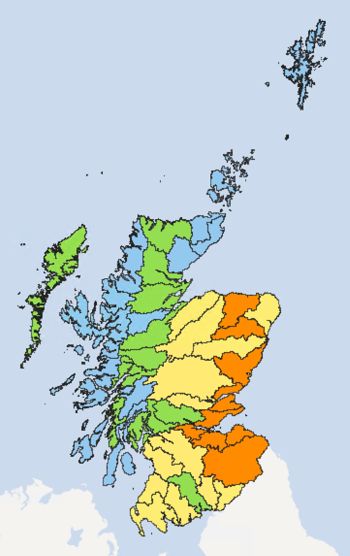
Image: weekly water scarcity report - 23 July 2026
The Scottish Environment Protection Agency's (SEPA) latest weekly water scarcity report shows conditions have deteriorated across much of the country. The Deveron and Almond catchments have moved into Moderate Scarcity, joining the Tyne (Lothian), Firth of Forth, Firth of Tay, Don (Aberdeenshire), Esk and Tweed.
Water scarcity is now most severe across eastern and southern Scotland, where many catchments are at Alert or Moderate Scarcity. Early Warning conditions form a broad band through the interior of the country and extend into the north and the Outer Hebrides. Much of the north-west and west coast remains at Normal Conditions, although Early Warning is beginning to extend into some western catchments.
Across eastern Scotland, most locations have recorded less than 10mm of rainfall during July, while Angus has received less than 3mm over the past three weeks. Parts of Aberdeenshire and the Cairngorms have also experienced exceptionally dry conditions.
The prolonged lack of rainfall has left soils across much of eastern Scotland very dry, with many rivers experiencing prolonged low flows. Several river monitoring stations are now recording flows amongst the lowest on record.
If exceptionally low river flows continue over the next few days, Berwickshire Coastal, Whiteadder Water, Lower Tweed, Lunan Water, Lower Don, Fife (East Neuk) and North Fife are expected to move into Significant Scarcity.
Significant Scarcity is declared when river flows remain below Q95, a recognised low flow threshold, for 30 days. When a station reaches Significant, SEPA will introduce targeted and temporary restrictions on licensed water abstractions to protect rivers and the wildlife that depends on them.
Since the beginning of May, SEPA has published weekly water scarcity reports and worked closely with organisations including NFUS, Farming and Water Scotland and the Scotch Whisky Association to help water users prepare for the season.
With conditions continuing to deteriorate, SEPA are urging farmers, businesses and other licensed abstractors who have not already done so to put those plans into action. This includes reducing abstraction where possible, improving water efficiency, staggering abstractions with neighbouring users where appropriate and implementing contingency plans. These actions can help reduce pressure on rivers and minimise the need for restrictions later in the season.
Shona McConnell, SEPA's Head of Compliance, said:
"Weeks of exceptionally dry weather are continuing to put pressure on rivers across much of Scotland, particularly in the east where some river flows are now amongst the lowest on record.
"Since the beginning of May we've been providing weekly updates and practical advice, while working closely with organisations including NFUS, Farming and Water Scotland and the Scotch Whisky Association, as well as engaging directly with licence holders in affected areas. Our aim has always been to give abstractors as much notice as possible so they can prepare.
"For many abstractors, now is the time to put those plans into action.”
Anyone can track conditions via SEPA’s Drought Risk Assessment Tool (DRAT), which shows colour-coded stations across Scotland and how close they are to Significant Scarcity.
DRAT is a network of flow gauging stations that SEPA monitor across Scotland and are used to set significant water scarcity when flows have been low for a sustained period of time.
All water abstractors should be aware of the risk of water scarcity, monitor their water use, and plan ahead for a range of weather conditions. Find further advice for abstractors and irrigators on our website.
Click here to access SEPA’s Drought Risk Assessment Tool
 Enpure Ltd and Clean TeQ Water Ltd have announced a collaboration agreement to bring Clean TeQ Water's Moving Bed Ion Exchange-based nutrient removal technologies to water utilities across the UK.
 Near-real-time microbial monitoring of wastewater discharge and bathing waters is now possible thanks to the BactoSense ID solution created by Swiss-based bNovate Technologies.
 ABB has launched AquaMaster+™, a digital platform for smart water network management, designed to help water utilities monitor, analyze and manage their water networks, preventing pipeline water losses and optimizing operations.
 Craig Nienaber, Business Development Manager for Safe Access Solutions (SAS) at HUBER Technology, explores why the company is seeing a growing level of interest in its safe access solutions for critical infrastructure providers, including their application in wastewater treatment assets.

 Southern Water has released film and images showing what it’s like to walk inside Hampshire’s expanded Yew Hill underground reservoir for the very last time, before it gets filled with water.
 Hear how Scottish Water has completed its £235 million Ayrshire Glasgow Resilience Project - customers across Greater Glasgow, Ayrshire and East Renfrewshire will now benefit from a more secure and resilient water supply.
 Hear how United Utilities is accelerating its investment to reduce spills from storm overflows across the Northwest.