

The forum will see politicians, water managers, the private sector, NGOs and communities come together to debate and share solutions to the global water challenge.
President Gorbachev told the Forum that the world must urgently respond to the global water crisis to prevent conflicts and reduce the unsustainable use of water and other natural resources to protect the planet.
President Gorbachev, Founder of the environmental NGO Green Cross International, said there had to be a political, economic and social shift in the way the world dealt with water, otherwise it would encounter devastating political and humanitarian consequences.
“Water consumption at 20th century rates is no longer possible.”
President Gorbachev said:
“Water is the basis for all development and its strategic importance has demonstrated it can serve as a vehicle for peace and also tension. The risk of competition between regions and countries may only increase if we do not find a way to protect and share water.”
“On our planet Earth we do have water, but accessible resources of fresh water are limited, and water use for human needs keeps rising. Continuation of water consumption at 20th century rates is no longer possible.”
Globally some 800 million people have no access to safe-drinking water, and 2.5 billion lack basic sanitation services. Water shortages and pollution cause major public health problems, curb development and harm ecosystems. More children die from diarrhoea caused by dirty water and lack of sanitation than malaria, measles, and HIV/AIDS combined. In North America and Japan, people use an average of 350 litres of water a day, and Europeans consume 200 litres daily, compared to people in Sub-Saharan Africa, who on average use 10-20 litres.
Major water projects could drive global economy
President Gorbachev said that major water projects, both national and international, could become one of the engines in a qualitatively new stage of the development of global economy.
He also said governments must ratify the 1997 United Nations Watercourses Convention, the only global legal framework to govern and manage the world’s 276 cross-border watercourses. Thirty-five countries must ratify it for it to come into force. So far, 24 countries have done so, including most recently Burkina Faso, Morocco and France. “A global legal instrument would help ensure equitable and sustainable management of international watercourses,” he added.
President Gorbachev’s Green Cross International actively promotes ratification of the UN Watercourses Convention and implementation of the UN-recognized Right to Water and Sanitation.
IUCN - natural infrastructure is backbone of green economy
The International Union for Conservation of Nature (IUCN), who are attending the Forum, said that natural ‘infrastructure’ such as river basins, forests, lakes and wetlands plays a key role in addressing today’s global water needs and must be an integral part of every country’s water management portfolio.
Mark Smith, Director of the IUCN’s Global Water Programme commented:
“A healthy environment is critical to strengthening our resilience against climate change.
“It protects us from floods, droughts, erosion and other disasters and keeps clean water flowing from our taps. No strategic package for financing can be complete without investment in natural infrastructure and no minister making a decision on water infrastructure can be fully briefed until the natural infrastructure options are on the table too.”
The IUCN described natural ‘infrastructure’ as the backbone of the green economy with the benefits of investing in it often exceeding the costs. For example, New York has spent US$ 1.5 billion on ecosystem management rather than $6 billion on a water filtration plant.
 Albion Water, the first NAV (New Appointment & Variation) to have been established in1999 and now under the ownership of SDS Water Group, has appointed Andy Holland as its new Director of Business Development.
 UK water companies are invited to join an upcoming webinar which will explore how the sector can take indirect potable reuse (IPR) from concept to full-scale operational reality.
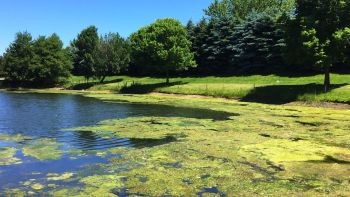 James Sumsion, CEO of predictive water intelligence specialists Kohtari, says the water sector needs to take a giant leap forward, so that it can anticipate and act upon water quality issues - rather than merely react.
 Ray Moulds, Sales Director at Flood Control International, takes a look at how automated sliding floodgates are supporting secondary containment at water and sewerage company sites.

 Hear how Scottish Water has completed its £235 million Ayrshire Glasgow Resilience Project - customers across Greater Glasgow, Ayrshire and East Renfrewshire will now benefit from a more secure and resilient water supply.
 Hear how United Utilities is accelerating its investment to reduce spills from storm overflows across the Northwest.
 Find out more about the remarkable career opportunities on offer at WSP - scroll down to watch the inspirational video.