

The European Commission has set out details outlining the employment challenges and opportunities of the current transition towards a green, low carbon, energy and resource-efficient economy.
The Green Employment Initiative presents an integrated framework to allow labour market and skill policies to play an active role to support this transition. The Communication focuses on the importance of anticipating and establishing adequate skills policies to support workers in coping with structural change, of securing labour market transitions, and of strengthening governance and partnership-based initiatives.
The new intiative complements existing measures on the Circular Economy and on a Green Action Plan for SMEs.
Environment Commissioner Janez Potočnik said: "The shift to a green and resource efficient economy is above all an opportunity to increase European global competitiveness and create sustainable and high quality jobs. The Green Employment initiative will help ensure that environmental and employment policies converge and play an active role in supporting this process."
Better targeting of labour market policies and tools, and closer coordination with environment, climate and energy policies, are essential to exploit the full employment potential of "green sectors". This process also brings important challenges, as the economic transformation leads not only to jobs being created, but also to others being redefined.
The Commission has set out an integrated framework for employment and labour market policies at EU and national levels, including:
- bridging skills and knowledge gaps by fostering the development of appropriate skills and better forecasting skills needs
- anticipating sectoral changes, securing transitions in employment and promoting mobility e.g. by promoting wide application of the European Quality Framework for anticipation of change and restructuring and working closely with public employment services
- supporting job creation through shifting taxation away from labour and on to pollution, promoting green public procurement, entrepreneurship and social entreprises
- increasing transparency and data quality to improve monitoring and analysis of labour market impacts of the green economy in the European Semester
- promoting dialogue between employer representatives and trade unions on the transition to the green economy
- strengthening international cooperation notably through the Green Growth Knowledge Forum launched by the Green Growth Institute, the OECD, the United Nations Environment Programme and the World Bank.
The Europe 2020 Strategy identifies the transition towards a green, low carbon and resource-efficient economy as one of the key ongoing structural transformations to achieve smart, inclusive and sustainable growth.
The job creation potential linked to production of energy from renewable sources, energy efficiency, waste and water management, air quality, restoring and preserving biodiversity and developing green infrastructure is seen as both significant and resilient to the business cycle changes.
There has been considerable creation of "green jobs" even during the economic crisis, increasing from 3 to 4.2 million in the EU between 2002 and 2011, and by 20% during the recession years (2007-2011).
 UK water companies are invited to join an upcoming webinar which will explore how the sector can take indirect potable reuse (IPR) from concept to full-scale operational reality.
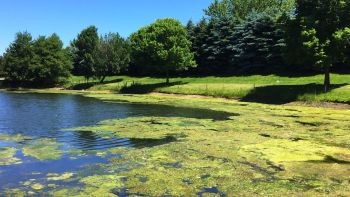 James Sumsion, CEO of predictive water intelligence specialists Kohtari, says the water sector needs to take a giant leap forward, so that it can anticipate and act upon water quality issues - rather than merely react.
 Ray Moulds, Sales Director at Flood Control International, takes a look at how automated sliding floodgates are supporting secondary containment at water and sewerage company sites.
 With the UK government demanding a 50% reduction in storm overflow spills by 2029, the era of reactive management is over. Speaking in the House of Commons on 21 July 2025, then environment secretary Steve Reed said, “This Government will cut water companies’ sewage pollution in half by the end of the decade.”

 Hear how Scottish Water has completed its £235 million Ayrshire Glasgow Resilience Project - customers across Greater Glasgow, Ayrshire and East Renfrewshire will now benefit from a more secure and resilient water supply.
 Hear how United Utilities is accelerating its investment to reduce spills from storm overflows across the Northwest.
 Find out more about the remarkable career opportunities on offer at WSP - scroll down to watch the inspirational video.