
Coffey tells EFRA Committee – recent floods worsened by “rain coming from opposite direction”
 Environment Minister Thérèse Coffey has said that the recent floods caused by Storm Babet were exacerbated by the impacts of rain coming from the opposite direction.
Leaks in homes could be costing the nation £697 million every year
 Leaks in homes could be costing the nation £697 million on water bills each year and wasting 900 million litres of clean drinking water every day - WaterWise data indicates a leak within the home could cost each household an extra £308.78 a year.
Future Water Networks November 2023 – register now for Asset Health webinar
 Registrations are now open for the first session in the Future Water Networks November 2023 series - a series of sessions comprising of leading industry keynotes, knowledge bites and technical presentations, taking place throughout November.
British Antarctic Survey warns substantial acceleration in West Antarctic Ice Sheet melting is now ‘unavoidable’
 The West Antarctic Ice Sheet will continue to increase its rate of melting over the rest of the century, no matter how much we reduce fossil fuel use, according to British Antarctic Survey (BAS) research published this week in the journal Nature Climate Change.
Defra - farmers and growers to be given continued access to important EU-approved pesticides
 The Department for Environment, Food & Rural Affairs has announced that British farmers and growers will continue to have access to important pesticides to support resilient and profitable food production and cut input costs.
A wake-up call: the UK water industry is at a critical turning point
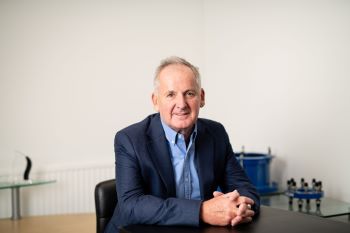 In an Expert Focus article for WaterBriefing, Paul Hubbard, of Chairman AVK UK Group, and Group Management Board member at AVK Holding A/S, says the UK water sector is at a critical turning point – and the supply chain has a key role to play in bringing about change.
Second National Infrastructure Assessment sets agenda for action over next 30 years
 Improved infrastructure to boost economic growth across the UK and meet climate goals is both achievable and affordable if the right policy steps are taken now, according to the government’s independent advisers on infrastructure strategy.
Thames21 unveils ‘first-of-its-kind’ online tool to tackle road runoff pollution and help London’s rivers
 A new online tool which highlights where the opportunities are to install nature-based solutions, such as wetlands, to tackle road runoff pollution before it ends up in London’s rivers has gone live today.
“What happens in the Arctic doesn’t stay in the Arctic”: MPs call for better focus of Arctic issues in Whitehall and funding boost
 In a new report published today, the House of Commons Environmental Audit Committee points to research that the Arctic is warming four times faster than the rest of the globe.
Scientists warn unprecedented temperature anomalies put 2023 on track as warmest year on record
 Unprecedented temperature anomalies in September have put 2023 on track to be the warmest year on record, according to the latest monthly climate bulletin from the Copernicus Climate Change Service (C3S).
News Showcase
-
Albion Water appoints new Director of Business Development
 Albion Water, the first NAV (New Appointment & Variation) to have been established in1999 and now under the ownership of SDS Water Group, has appointed Andy Holland as its new Director of Business Development.
 -
Webinar to explore moving indirect potable water reuse to full implementation
 UK water companies are invited to join an upcoming webinar which will explore how the sector can take indirect potable reuse (IPR) from concept to full-scale operational reality.
 -
Kohtari CEO says joined-up water intelligence needed to predict, not just react - not more data
 James Sumsion, CEO of predictive water intelligence specialists Kohtari, says the water sector needs to take a giant leap forward, so that it can anticipate and act upon water quality issues - rather than merely react.
 -
IED compliance – using automated sliding floodgates to support secondary containment at water and sewerage company sites
 Ray Moulds, Sales Director at Flood Control International, takes a look at how automated sliding floodgates are supporting secondary containment at water and sewerage company sites.
Expert Focus


News Sections
Other Latest News
- United Utilities tenders c£25 m AMP8 contract for sewer flooding mitigation framework
- Ofwat consults on proposed new approach to leakage reporting methodology
- Blaenau Gwent County Borough Council tenders £36 million contract for coal spoil tips maintenance services
- Thames Water terminates current procurement process for Teddington Direct River Abstraction Tunnelling Main Works Contract
- Scottish DWQR reports drinking water quality in Scotland remains amongst best in the world – but flags up ongoing concerns
- Anglian Water - work underway on £15.7 million upgrade to Huntingdon’s sewer network
Watch
-
Scottish Water completes £235m investment in two-way connection between drinking water networks
 Hear how Scottish Water has completed its £235 million Ayrshire Glasgow Resilience Project - customers across Greater Glasgow, Ayrshire and East Renfrewshire will now benefit from a more secure and resilient water supply.
 -
United Utilities accelerates investment to reduce spills from storm overflows across Northwest
 Hear how United Utilities is accelerating its investment to reduce spills from storm overflows across the Northwest.
 -
Working for WSP - what if you could build a career as unique as you? With us, you can
 Find out more about the remarkable career opportunities on offer at WSP - scroll down to watch the inspirational video.
Top Stories
Login / Register
New Account Registrations
To register for a new account with Waterbriefing, please contact us via email at waterbriefing@imsbis.org
Existing waterbriefing users - log into the new website using your original username and the new password 'waterbriefing'. You can then change your password once logged in.