
Commons Committee warns heat-related deaths set to treble by 2050 unless Govt acts
 A House of Commons Parliamentary Committee is warning that heat-related deaths are set to treble by 2050 and that the higher temperatures which caused 2000+ deaths in 2003 will be the summer norm by the 2040s.
Commons Committee want Government to make climate risk reporting for large companies and pensions compulsory
 The House of Commons Environmental Audit Committee is calling on the Government to make it mandatory for all large companies and asset owners—such as pension funds—to report their exposure to climate change risks and opportunities by 2022.
Parliamentary inquiry into heatwaves to hear evidence from water experts
The Environmental Audit Committee will today hear oral evidence from water experts as part of its ongoing inquiry into how the UK is planning on adapting to the growing risk of heatwaves resulting from climate change,
Ofwat report explores potential for deep cuts in household water demand in England and Wales
 With climate change and a growing population likely to place ever greater strains on vital water resources, a new report released today by water sector regulator Ofwat explores the potential options to help cut demand for water over the next 50 years.
Environment Agency - work gets underway on £7m Lincolnshire coast flood scheme
Around 400,000 cubic metres of sand are set to be pumped onto Lincolnshire’s beaches to reduce flood risk to more than 20,000 homes and businesses, 24,500 static caravans and 35,000 hectares of land in a massive Environment Agency-led project.
New UK/US research to predict risk of catastrophic sea level rise as antarctic ice loss spreads
 A new UK-U.S. Antarctic research programme to improve the prediction of future sea-level rise was launched yesterday at British Antarctic Survey (BAS), Cambridge to discover whether the collapse of a huge Antarctic glacier could raise global sea levels by as much as a metre by the end of this century.
Thames Water to take full account of NIC report recommendations
Thames Water chief executive Steve Robertson has welcomed today’s report by the National Infrastructure Commission which is warning the Government that England faces taps running dry without urgent infrastructure improvements.
Government warned England faces taps running dry without infrastructure improvements
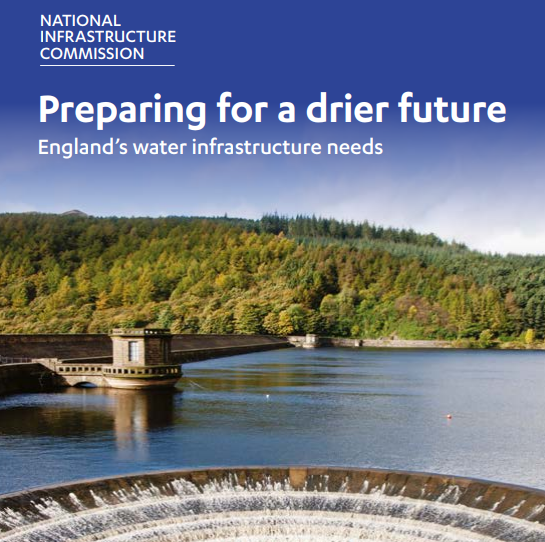 The Government is being warned that England’s homes and businesses could face having their water supplies cut off in times of severe drought, if the water industry does not improve infrastructure and water efficiency.
Commons Environmental Audit Committee launches sustainable seas inquiry
 The House of Commons Environmental Audit Committee has launched a new inquiry on the future of the seas – examining how they can be protected from climate change, acidification, overfishing and pollution, and how the Government can create a sustainable blue economy.
Lloyd’s posts £2bn loss for 2017 - one of costliest years for natural catastrophes in past decade
Following one of the costliest years for natural catastrophes in the past decade, Lloyd’s of London has announced an aggregated market loss of £2 billion for 2017.