

The House of Commons Public Accounts Committee is warning that the Government is simply not doing enough to protect the UK’s current housing stock from floods or stepping in to prevent new homes being built on flood plains.
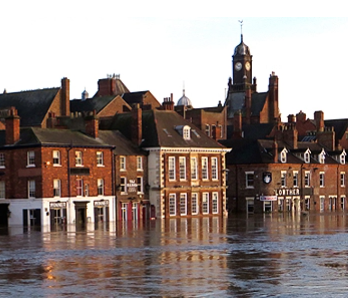
The warning comes in the Committee’s new report Managing flood risk - Forty-Fifth Report of Session 2019–21 published today.
The Committee says neither Defra nor the Environment Agency (EA) understand enough about the significant decline in the proportion of flood investment going to deprived areas since 2014, or about the wide variation in the level of flood defence investment per property at risk across regions.
According to the report current indicators used to monitor national flood risk do not cover important elements such as risks to agricultural land, business premises, and infrastructure. In addition, short-term funding cycles are impacting on EA’s ability to manage flood risks effectively.
“Next housing and building regulations scandal brewing” in flood protection failures
The impacts of climate change can already be seen in the increasing strain on existing flood defences, the report says. Only half of the defences damaged in the 2019-20 winter floods have had their standard of protection restored. According to the Committee, Defra has not addressed the problem of prohibitive insurance costs imposed on the recently flooded or removed the obstacles to households taking up their own flood resilience measures.
The MPs are warning that more extreme weather as a result of climate change and increased housing development will continue to increase the UK’s flood risks. The report says:
“Despite the obvious risks, and a government policy not to build on flood plains "unless unavoidable", the Environment Agency thinks there could be an increase of up to 50% in the number of houses built on flood plains over the next 50 years.
“EA is working with MHCLG on the planning reforms needed to mitigate the risk of building in these areas but responsibility for surface water flooding, worsened by developments in urban areas, sits with the local authority. Scarce local authority resources, now under further extreme strain from the pandemic, and low levels of private sector investment are hampering England's flooding response.”
The Committee is suggesting that Defra should recognise that with new build on the flood plain and increased vulnerability to existing properties from climate change, the net number of homes that are better protected is actually lower.
Short-term funding cycles are impacting EA’s ability to manage flood risks effectively
The Committee is also warning that short-term funding cycles are impacting on the Agency’s ability to manage flood risks effectively.The report says that the Agency has a six-year capital funding settlement for investment in flood defences (2021–22 to 2026–27), but only a one-year settlement for revenue funding (2021–22). Revenue funding pays for people and running costs including the on-going maintenance of flood defences.
Maintenance costs are increasing due to more extreme weather as a result of climate change, more flood defences being built and as some defences reach the end of their life, report says.
However, only half of the defences damaged in the 2019–20 winter floods have had their standard of protection restored. Multi-year revenue funding settlements would improve planning in areas such as staffing.
The Committee is recommending that Defra and the EA should work with HM Treasury to reduce the adverse impacts of short-term funding cycles. It also wants the Government to undertake a cost benefit assessment of the level of funding needed to maintain flood defences and flood risk management assets both at and above current Environment Agency target condition.
The Environment Agency should have a duty to maintain flood defence assets and the Government should commit to maintenance funding in revenue funding settlements for longer-term security, the MPs say.
Partnership funding - private sector contributions fall to just 7% between April 2015 and March 2021, down from 25% between April 2011 and March 2015
Other concerns the Committee has expressed include:
The partnership funding model - has been successful in attracting additional investment to flood defence projects, but the level of private sector contributions has fallen to just 7% between April 2015 and March 2021, down from 25% between April 2011 and March 2015. While the Department and Agency want to see this percentage increase, the impact of Covid-19 on contributions is uncertain.
Recommendation: The Department and the Agency should identify areas where there is likely to be a shortfall in local authority resources and private sector contributions to ensure the effective management of flood risk in local areas. They should report to us on their assessment by July 2021.
Strategic flood management - In 2014 the NAO report on strategic flood management found there was a profusion of plans that often duplicate across geographical or administrative areas. Defra and the Agency have not followed the NAO recommendation to review their strategies and plans with a view to rationalise them to reduce the burden on communities and to promote public engagement.
Recommendation: Defra should write to the Committee within 6 months with an update on the opportunities to streamline local planning and with a timeline for implementation of any reforms.
Affordable insurance –“we are not convinced that the Department has yet done enough”
Commenting on affordable flood insurance, the Committee says:
“We are not convinced that the Department has yet done enough to address the difficulties those recently flooded have in getting affordable insurance. Some people who have recently been flooded still face difficulties in obtaining affordable insurance.”
According to the report, Defra has stated that the existence of Flood Re should ensure that affordable insurance is available even for those households at high levels of flood risk. However, it points out that Defra’s own research following the floods in Doncaster in November 2019, suggests that some people were still unable to obtain affordable insurance.
The Committee is calling for Defra to write to it by April 2021 setting out the findings of its research into non-take up of insurance and how it is going to ensure remaining obstacles to obtaining affordable insurance are addressed. It should include what it is doing to overcome the obstacles to households implementing property-level flood resilience measures.
“Next housing and building regulations scandal brewing” in flood protection failures
Meg Hillier MP, Chair of the Public Accounts Committee, said:
"Damaging floods are becoming more and more frequent and with climate change extreme flooding events are not going to just go away. With public finances stretched to the limit, Government and the Environment Agency have to do more to make sure limited funds for flood defence and risk management are spent effectively. The risks to our homes, businesses, national infrastructure, food supply and whole ecosystems are not even being properly monitored, much less strategically mitigated.
You can see the next major housing and building regulations scandal brewing here - the Government is simply not doing enough to protect the UK’s current housing stock from floods or stepping in to prevent new homes being built on flood plains, and more needs to be done to tackle the prohibitive home insurance costs that result."
Click here to download the Public Accounts Committee report in full Managing flood risk - Forty-Fifth Report of Session 2019–21
 ABB has launched AquaMaster+™, a digital platform for smart water network management, designed to help water utilities monitor, analyze and manage their water networks, preventing pipeline water losses and optimizing operations.
 Craig Nienaber, Business Development Manager for Safe Access Solutions (SAS) at HUBER Technology, explores why the company is seeing a growing level of interest in its safe access solutions for critical infrastructure providers, including their application in wastewater treatment assets.
 Albion Water, the first NAV (New Appointment & Variation) to have been established in1999 and now under the ownership of SDS Water Group, has appointed Andy Holland as its new Director of Business Development.
 UK water companies are invited to join an upcoming webinar which will explore how the sector can take indirect potable reuse (IPR) from concept to full-scale operational reality.

 Southern Water has released film and images showing what it’s like to walk inside Hampshire’s expanded Yew Hill underground reservoir for the very last time, before it gets filled with water.
 Hear how Scottish Water has completed its £235 million Ayrshire Glasgow Resilience Project - customers across Greater Glasgow, Ayrshire and East Renfrewshire will now benefit from a more secure and resilient water supply.
 Hear how United Utilities is accelerating its investment to reduce spills from storm overflows across the Northwest.