

In an Expert Focus article for Waterbriefing, David Smith, Chief Strategy Officer for MWH Global, calls for countries and populations to do more to improve water resilience because of the huge impact it has on access to clean water, global health, jobs, economies and societies.
David Smith: Global leaders at the 2016 World Economic Forum (WEF) now see the failure of climate change mitigation and adaption as the top risk in terms of impact on people and their countries with ‘water crises’ third.
 Most of us would argue that climate change and water resilience are inextricably linked. Which is probably why ‘water crises’ has not left the top ten of global leaders’ priorities for several years and was even reclassified by WEF from an environmental risk to a societal risk last year. This acknowledged that nearly all human activity — from growing wheat and catching fish to powering industries and communities — has water at its base.
Indeed, as World Water Day highlights ‘water can change workers' lives and livelihoods - and even transform societies and economies’. They state that almost half of the world's workers - 1.5 billion people - work in water related sectors and nearly all their jobs depend on water and its safe delivery. Which brings us back to the importance of creating water resilience to counter drought in the world’s most productive farmlands and bring health through safe drinking water to the billions of people still without access.
Climate change will profoundly affect water security worldwide
The hydrologic system is tied to climate, and climate change will profoundly affect water security worldwide. Droughts, floods, glacial melt, unpredictable precipitation, runoff, groundwater supplies and water quality will all reflect an increasing instability as long-standing rainfall patterns change and weather extremes increase. Global Risks 2015 says that the nexus of water, food, energy and climate change “is one of the overarching megatrends that will shape the world in 2030.”
There is also some brightness on the horizon. Advances that could be game changers in terms of meeting the global resilience challenge. For example new technologies, use of digital real time systems, precision agriculture, water reuse, cheap desalination, nanotechnology, and ‘at-tap’ treatment systems could all be game changers.
So, on World Water Day 2016, with much of the world’s population still needing access to safe water and the even wider water resilience challenges facing society, water is more than ever of paramount global importance.
Water is becoming scarcer
WEF’s report highlights that the risk to water supplies increases as global temperatures rise. Climate change is expected to cut water availability in Southern Europe, the Middle East, North Africa, and the American Southwest while also increasing the number of severe rainstorms. According to worst-case projections by the United Nations, ‘engulfing rains or deep droughts’ could slash crop yields by 25 per cent by 2050.
Roughly one-third of the world’s population now lives in water-stressed areas, 1.8 billion people drink unsafe water (International Journal of Environmental Research and Public Health) and waterborne infections kill nearly two million people every year. Some of the signs are obvious like low levels in reservoirs and dry river beds but more than 95% of Earth’s freshwater is stored in underground aquifers. And this groundwater is being used far more quickly than it is being replenished.
However, what if we could introduce more efficient ‘precision agriculture’ to monitor, automate and manage water usage? For example, linking to weather reports; so fields are not irrigated when rain is expected. This could massively reduce agricultural water usage. Similarly where there is a reluctance to drink ‘re-cycled and treated’ water, it could still be used for many other purposes. And imagine if we could find a way to create a low energy and inexpensive solution to desalinate sea-water?
And from one extreme to the other… flooding continues
Flooding is occurring more often and with more devastating effect all over the world. More people are being affected by more severe and more frequent flooding. The drivers, which include land use change, housing and infrastructure growth (caused by population growth and demographic changes), climate change and deteriorating assets, are well understood and likely to worsen.
Leaders recognise they must take care of water
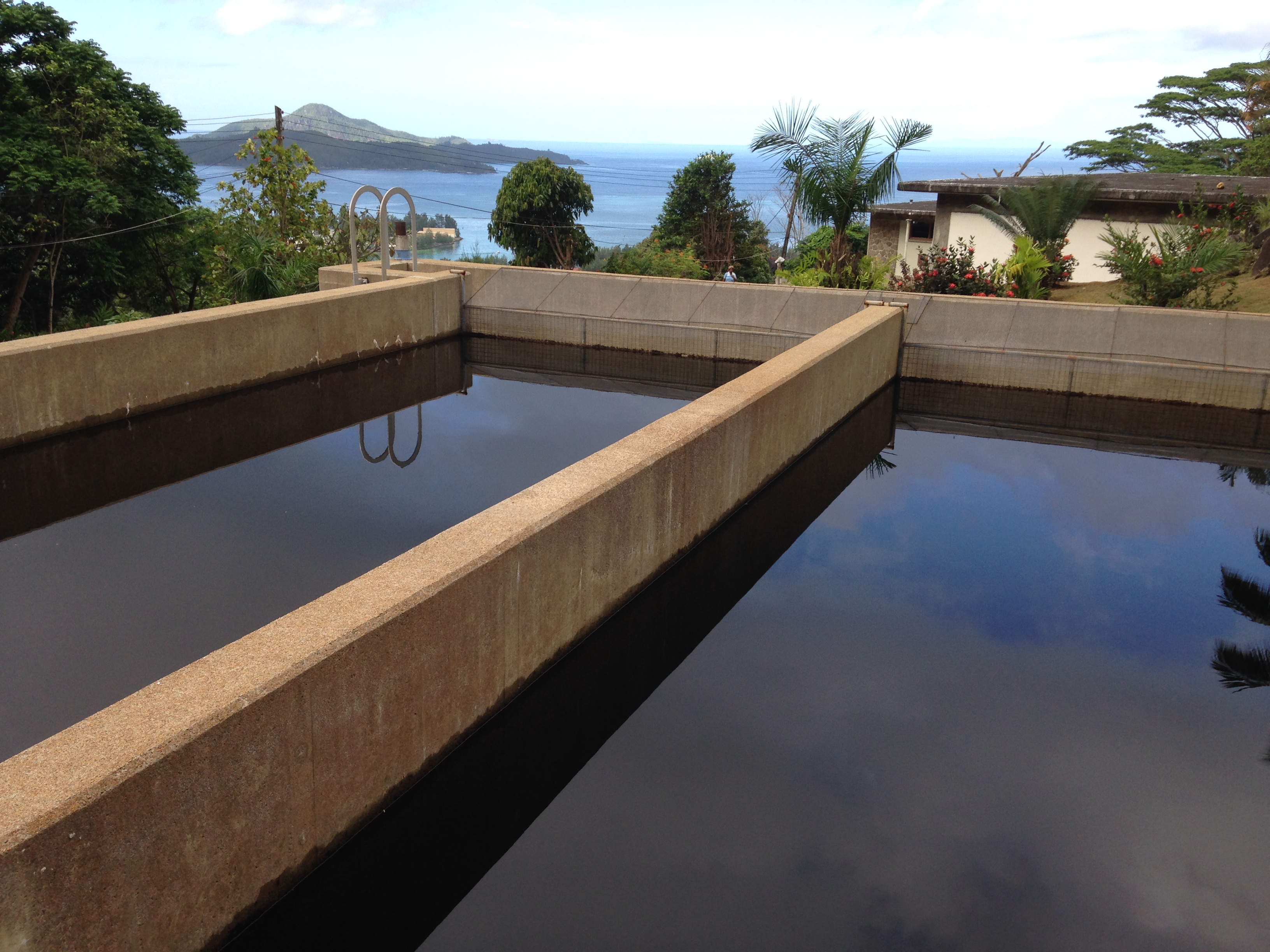 The challenge is how to provide clean drinking water and sanitation for our increasing global populations, with their diverse regional challenges and complex infrastructures combined with the added pressures and impacts of climate change?
As Australia’s most important river basin, the Murray-Darling is seen as an example of an effective solution. It provides water for two million people and 40 percent of the country’s agriculture. The long drought, which ended late in the 2000s, forced water managers to completely rework the system for allocating water to farmers, cities, and ecosystems. Less water would be available for farmers and more would be set aside to maintain the health of the river. Leaders committed money and took difficult political decisions to abandon traditional management practices in favour of decisions that were based on data and scientific merit. Out of the crisis came the world’s most advanced system for analysing water flows in a river basin.
Water is a pressing issue for China and the U.S. Both countries have water stress where most of their energy resources are located and their power plants require a lot of water to operate. They have implemented a joint research initiative, The U.S.-China Clean Energy Research Centre to examine the challenge of developing new natural gas and oil resources and meeting renewable energy goals with limited water resources.
Cities could be the catalyst for change
Climate change extremes, resource scarcity, and conflict mean that resilience of water infrastructure and services has become critical to the continuity of the services we rely on and in maintaining the fabric of our societies. Water resilience is no longer just about preventing, managing or recovering from flooding and drought but keeping the lights on and the taps supplied with safe water. Cities populations continue to grow and increasingly we are seeing coastal mega-cities forming which will be more at risk from climate change extremes and intense human activity. But although vulnerable, these mega-cities may also drive the catalyst for invention and changing human behaviours that will allow us to tackle the water resilience challenge.
My colleague, Adrian Johnson, MWH Technical Director and Sustainability expert, believes there is reason for optimism as individual cities can make a huge impact and sees increasing signs of them tackling water challenges: “The 2015 Paris Agreement on climate change could be the catalyst for both improved water resilience and reduced water-related energy use in our cities, supporting progress towards a low carbon future.”
This is particularly pertinent to the water sector because pumping and treating water and wastewater is very energy intensive. Additionally, many climate change impacts manifest as changes in the water environment. Cities and urban areas not only have the most intensive water demands but are most exposed to the impacts of water-related risks – floods and droughts. Because of this, many cities, businesses and regional governments are driving change towards more resilient water services.
Water doesn’t separate; it connects
Water brings both economic and societal benefits from the jobs it creates to better health. However, what begins as a regional or local crisis can quickly become a global problem.
Companies, NGOs and governments are now working together to protect water, design more resilient cities and improve efficiency. Water withdrawals in the United States as a whole peaked in1980 and have trended downward ever since. In Australia, after their devastating drought in the 2000s, cities cut water consumption by as much as 40%. Effective water, sanitation and health programmes in developing countries are saving lives and building better futures for families.
It can be done, but we all need to accept that action is no longer optional, it is essential. We need to work together across borders, governments and politics to share knowledge and create innovative solutions. The United Nations Sustainable Development Goals framework will help drive change with its goal of ‘ensuring availability and sustainable management of water and sanitation for all’. This will require collaborative management of groundwater, surface water and watersheds and investment.
A failure to act will be a tragedy for future generations. Water is essential to every aspect of life and it needs more investment now. Populations are increasing and whether man-made or not our climate is changing – meaning more water scarcity and more flooding is creating a new global water resilience challenge. Our world leaders are right – the impact of water crises presents one of the top risks to our global security and the health and sustainability of our people and planet. So let’s use World Water Day to remind our governments and populations that we need to act now… together.
David Smith is the chief strategy officer at MWH Global and holds board director positions within a number of MWH’s operating companies and joint venture companies. He is executive-in-charge and board member of the 4D Joint Venture for Southern Water.
 Enpure Ltd and Clean TeQ Water Ltd have announced a collaboration agreement to bring Clean TeQ Water's Moving Bed Ion Exchange-based nutrient removal technologies to water utilities across the UK.
 Near-real-time microbial monitoring of wastewater discharge and bathing waters is now possible thanks to the BactoSense ID solution created by Swiss-based bNovate Technologies.
 ABB has launched AquaMaster+™, a digital platform for smart water network management, designed to help water utilities monitor, analyze and manage their water networks, preventing pipeline water losses and optimizing operations.
 Craig Nienaber, Business Development Manager for Safe Access Solutions (SAS) at HUBER Technology, explores why the company is seeing a growing level of interest in its safe access solutions for critical infrastructure providers, including their application in wastewater treatment assets.

 Southern Water has released film and images showing what it’s like to walk inside Hampshire’s expanded Yew Hill underground reservoir for the very last time, before it gets filled with water.
 Hear how Scottish Water has completed its £235 million Ayrshire Glasgow Resilience Project - customers across Greater Glasgow, Ayrshire and East Renfrewshire will now benefit from a more secure and resilient water supply.
 Hear how United Utilities is accelerating its investment to reduce spills from storm overflows across the Northwest.