


With the publication date for Ofwat to publish more draft determinations on water company PR19 business plans fast approaching, Tim Williams, Strategic Growth & Business Development Director for Water at Stantec, takes an in-depth look in an Expert Focus article for Waterbriefing at how the story has unfolded to date, and where the sector is heading.
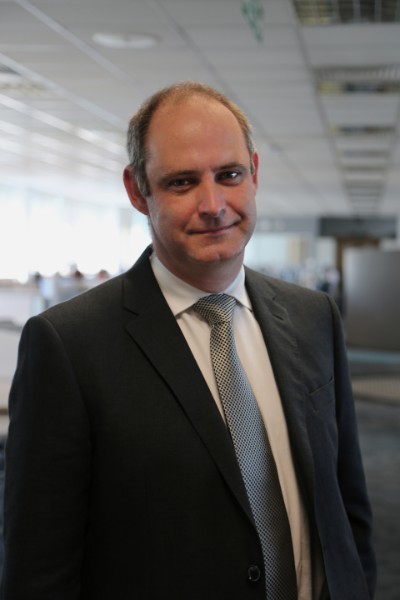 Tim Williams: The story unfolds.
Having submitted business plans on the 3 September 2018 the water companies of England and Wales waited until 31 Jan 2019 to receive the Initial Assessment of their Plans (IAP) from Ofwat. These assessments marked a critical milestone in the price review process. Initial press reaction (as it was in September 2018) was muted. With no companies reaching the level where their plans would be judged as “Exceptional” by the regulator, Ofwat, and with only three reaching “Fast Track” status, a great deal of work has been undertaken by companies to respond to Ofwat by 1 April 2019.
Since then, the Draft Determinations have been published on 11 April 2019 of the three organisations meeting the “Fast Track” standard. All three of these determinations include reductions in customer bills This against a backdrop of improving service standards for customers and the environment, including reductions in leakage of 15 to 20%.
Meanwhile, those other companies who were in the “Slow Track” or “Significant Scrutiny” are awaiting their draft determinations due on the 18 July 2019 and driving on in preparation for their next opportunity to respond to the regulator by 30 August 2019.
The view from the regulator seemed to be that the plans were a bit of a mixed bag with even those Fast Track companies needing further work. So how did the sector match up to some of the tests set by the Regulator?
Overall the industry appears to have been more customer focused than ever before, with good scores overall on customer engagement as well as addressing affordability and vulnerability. For some though, there were shortfalls shown as requiring work.
Resilience scored lowest in Ofwat AMP7 Business Plan tests
Of all the tests set, the lowest score achieved by the sector was that on Resilience. Ofwat stated that it “wanted to see resilience in the round embedded across the whole of each companies’ business”.
Ofwat also emphasised its overall assessment of resilience by stating that “companies do not use a system based approach to assess risks to resilience” and “start to consider resilience…but do not make enough of nature-based solutions to improve resilience beyond catchment management schemes”.
A key point here perhaps is that the industry still relies on conventional engineering solutions. The step change in resilience expected by the Regulator may take longer than anticipated, with even those best performing companies in this area achieving a “B” grade. To have a truly resilient service is likely to take a great deal of time, forethought and investment, and may be challenging to achieve in an environment of reducing customer bills. Financial and corporate resilience was likewise a mixed assessment.
Targeted Controls, Markets and Innovation
As a specific area, this topic scored third highest in the test areas. This is a little surprising given that Ofwat stated “we are disappointed with most companies’ responses to opportunities from direct procurement”, going on to point out that although the threshold test of £100m totex was applied well, “numerous projects are rejected by companies for either technical reasons…or lower comparable value for money”.
With one or two notable exceptions, where companies had proposed schemes for DPC, these were much later in the regulatory period with assessment and delivery over potentially decades. Other positive aspects in this area tended to be demonstrated by individual companies rather than a broad sample.
For example, Ofwat highlighted examples of good practice from one company in its approach to the use of markets regarding biosolids where it stood out for its plan outlining “general plans for the outsourcing, thickening and dewatering, biogas management and the market delivery of sludge capacity”.
Another company was picked out as being the only company to receive an “A” grade for innovation with its approach described as showing “the most embedded innovation culture across all water companies.
With innovation a core value linked to every employee’s annual appraisal and bonus process”, it is of note that Ofwat expects the fast track organisations (and presumably others) to “share their ideas and to continue learning from other companies in the sector and outside, so that all customers can benefit from innovation”.
Efficiency - significant difference in targets between Fast Track companies and those in other categories
The business plan assessment results initially showed a significant difference in efficiency targets between the Fast Track companies and those in other categories. The Fast Track companies having an efficiency challenge of some 3% compared with the significant scrutiny ones at 19%.
Looking at the Fast Track companies, this appears to have carried forward to their Draft Determinations. Ofwat appears to have considered the base expenditure targets set by some companies to be too stretching over the period and has looked to counter this within the draft determinations. The treatment of expenditure between base and enhancement also looks different with efficiency challenges on enhancement of up to 23% and is well above the efficiency challenge for base for all the Fast Track companies.
The underlying reasons for this expenditure challenge are slightly opaque. It may be the case that large investment proposals of work have been challenged out, companies having failed to supply the appropriate “strong evidence of need and cost benefit analysis to support their investment programmes…or considered regional solutions and the long term”.
It is clear though that the challenge placed on expenditure for enhancement is way above that for base expenditure. The distinction between base and enhancement can be intricate, especially in this price review where there has been a clear need to understand the expenditure required to meet current service levels, alongside those to maintain or improve others, including asset health, leakage or interruptions to supply as well as the cost benefit that applies and other more diverse regional solutions.
Regional Solutions - marked emphasis on firms working together on problems
There is a marked emphasis on companies working together to provide regional solutions to problems and to improve resilience. This is seen particularly in the development of strategic water resources options. Ofwat state they are providing funding of £360 million to “facilitate the development of strategic water resources options for the South and South East of England”.
This sets the potential vision for a framework enabling national transfers of water from the North West to the South East of England. Setting up of the regional water resource groups and a national water resources framework steering group shows a marked change in water resource thinking and is likely to be a key enabler to long term strategic water movements across parts of the UK.
What does this mean?
For those companies with Fast Track status, who have received draft determinations, there is opportunity to potentially draw breath as well as move forward with greater certainty, avoiding the distractions of further intense work on their business plans for PR19. This may enable those organisations to plan for delivery in AMP7, and to work on transition expenditure if it was part of their plan to do so. With AMP7 requiring a step change in efficiency alongside the highest levels of expenditure and service standards the industry has ever seen, an early start surely can only be a good thing.
But what for the sector? Having looked at the plans and the shortfalls, Ofwat has made clear the areas the sector needs to improve alongside significant efficiency improvements. The efficiency targets certainly look stretching, the challenge is how to deliver both base and enhancement expenditure and meet those challenging targets.
Resilience is obviously key to businesses that operate complex systems. No longer is it enough to be able to assess how resilient a company is, but now the evolution is to understand how those systems interact and how resilience plays a role in decision making at all levels.
The high-water mark to date of how asset management developed in the sector may have been seen just after PR09. Some companies in their business plans appear to have looked at the long term and sought to start a new age in asset maintenance addressing the challenges of assets which have an implied life approaching a millennium (sewers for example) and mechanical and electrical equipment installed in the decade after privatisation now approaching a period of renewal or replacement.
The complexity of decision making and the systems those decisions affect is likely to lead the evolution of how assets are managed. I suggest that understanding risk, resilience and cost benefit needs a step change in thinking to deal with the issue the industry faces.
Several themes link together here, good asset management coupled with an understanding of resilience and systems thinking should enable better decision making including thorough cost benefit assessment.
Time for innovation and different thinking in face of major challenges
However, with the sector facing the challenge of affordability as well as ageing assets, many may suggest that the time may not be right now to try to deal with the storm the sector is facing of ageing assets, resilience and a drive to continue to improve service. I have a counter view that now is the time to seize the opportunity to change our thinking.
The next stage in the process will be key. With one group of companies already in receipt of their draft determinations and the remainder due in mid-July, the summer is again set to be interesting. Solving the equation of affordable bills, improving service and resilience, yet providing an equitable return to investors is a challenge.
All this must be looked at with a long-term lens to ensure that we are not building up programmes of work for future generations. The sector will have to continue to evolve its thinking at the same time as addressing the immediate and short-term demands. Never was there such a time for innovation and different thinking. It feels like necessity will indeed be the mother of invention for the next five years.
 Barhale has completed work on two separate Rapid Action Taskforce Spills projects it is carrying out for Severn Trent.
 Börger UK, which has firmly established itself as a leading pump brand since it was set up in Staffordshire in 2004, has moved into bigger, brand-new premises in Shrewsbury.
 HUBER Technology UK & Ireland are inviting people to register for their March webinar where they will be providing information about HUBER water intake screens for municipal and industrial applications.
 Sulzer has launched a new global Center of Excellence (CoE) for Water Treatment Solutions - the CoE consolidates Sulzer’s wastewater treatment expertise in a unified and global manner.

 Hear how Scottish Water has completed its £235 million Ayrshire Glasgow Resilience Project - customers across Greater Glasgow, Ayrshire and East Renfrewshire will now benefit from a more secure and resilient water supply.
 Hear how United Utilities is accelerating its investment to reduce spills from storm overflows across the Northwest.
 Find out more about the remarkable career opportunities on offer at WSP - scroll down to watch the inspirational video.