

Ahead of COP27, the UN climate summit which starts in Egypt in Sharm El- Sheikh this Sunday, UNESCO is warning that the accelerated melting of glaciers in 50 World Heritage sites, which are home to total of 18,600 glaciers, will see a third of them disappear by 2050.

Data in a new study by UNESCO, in partnership with IUCN, shows the glaciers have been retreating at an accelerated rate since 2000 due to CO2 emissions, which are warming temperatures.
The glaciers in the World Heritage sites cover around 66,000 km2, representing almost 10% of the Earth’s total glacierized area. They include the highest (next to Mt. Everest), the longest (in Alaska), and the last remaining glaciers in Africa, amongst others, giving a representative overview of the general situation of glaciers in the world.
They are currently losing 58 billion tons of ice every year – equivalent to the combined annual water use of France and Spain– and are responsible for nearly 5% of observed global sea-level rise.
Only one effective solution: quickly reduce CO2 emissions
The report concludes that regardless of efforts to limit temperature increases, the World Heritage glaciers are condemned to disappear by 2050. However, it is still possible to save the glaciers in the remaining two thirds of sites if the rise in temperatures does not exceed 1.5°C compared to the pre-industrial period.
Examples of endangered glaciers by region
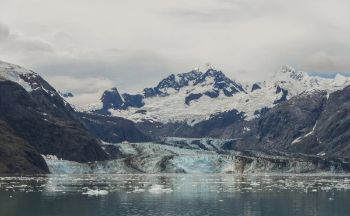
Image credit: Unesco, Mark Kelley
Africa: According to available data, glaciers in all World Heritage sites in Africa will very likely be gone by 2050, incl. Kilimanjaro National Park and Mount Kenya
Asia:Glaciers in Three Parallel Rivers of Yunnan Protected Areas (China) – #1 highest mass loss relative to 2000 (57.2%) and also the fastest melting glacier on the List. Glaciers in Western Tien-Shan (Kazakhstan, Kyrgyzstan, Uzbekistan) have shrunk by 27% since 2000
Europe: Glaciers in Pyrenees Mont Perdu (France, Spain) – very likely to disappear by 2050. Glaciers in The Dolomites (Italy) – very likely to disappear by 2050
Latin America:
Glaciers in Los Alerces National Park (Argentina) – #2 highest mass loss relative to 2000 (45.6%). Glaciers in Huascaran National Park (Peru) have shrunk by 15% since 2000
North America:
Glaciers in Yellowstone National Park (United States of America) – very likely to disappear by 2050. Glaciers in Waterton Glacier International Peace Park (Canada, United States of America) have lost 26.5% of their volume in 20 years
Oceania: Glaciers in Te Wahipounamu - South West New Zealand (New Zealand) have lost almost 20% of their volume since 2000
Half of humanity depends directly or indirectly on glaciers as their water source
According to UNESCO, only a rapid reduction in CO2 emissions levels can save glaciers and the exceptional biodiversity that depends on them.
Half of humanity depends directly or indirectly on glaciers as their water source for domestic use, agriculture, and power. Glaciers are also pillars of biodiversity, feeding many ecosystems.
When glaciers melt rapidly, millions of people face water scarcity and the increased risk of natural disasters such as flooding, and millions more may be displaced by the resulting rise in sea levels.
The study highlights the urgent need to cut greenhouse gas emissions and invest in Nature-based Solutions, which can help mitigate climate change and allow people to better adapt to its impacts.
In addition to drastically reduced carbon emissions, UNESCO is advocating for the creation of an international fund for glacier monitoring and preservation. Such a fund would support comprehensive research, promote exchange networks between all stakeholders and implement early warning and disaster risk reduction measures.
COP27 will have a crucial role to help find solutions to this issue - however, UNESCO says keeping the rise in global temperatures down to 1.5°C compared to the pre-industrial period will be a major challenge for COP27.
Launching the report, Audrey Azoulay, UNESCO Director-General said:
"This report is a call to action. Only a rapid reduction in our CO2 emissions levels can save glaciers and the exceptional biodiversity that depends on them. COP27 will have a crucial role to help find solutions to this issue. UNESCO is determined to support states in pursuing this goal."
Click here to access the full report online
 Near-real-time microbial monitoring of wastewater discharge and bathing waters is now possible thanks to the BactoSense ID solution created by Swiss-based bNovate Technologies.
 ABB has launched AquaMaster+™, a digital platform for smart water network management, designed to help water utilities monitor, analyze and manage their water networks, preventing pipeline water losses and optimizing operations.
 Craig Nienaber, Business Development Manager for Safe Access Solutions (SAS) at HUBER Technology, explores why the company is seeing a growing level of interest in its safe access solutions for critical infrastructure providers, including their application in wastewater treatment assets.
 Albion Water, the first NAV (New Appointment & Variation) to have been established in1999 and now under the ownership of SDS Water Group, has appointed Andy Holland as its new Director of Business Development.

 Southern Water has released film and images showing what it’s like to walk inside Hampshire’s expanded Yew Hill underground reservoir for the very last time, before it gets filled with water.
 Hear how Scottish Water has completed its £235 million Ayrshire Glasgow Resilience Project - customers across Greater Glasgow, Ayrshire and East Renfrewshire will now benefit from a more secure and resilient water supply.
 Hear how United Utilities is accelerating its investment to reduce spills from storm overflows across the Northwest.