

A new study by the International Groundwater Resources Assessment Centre (IGRAC) has analysed 20 years of groundwater-level measurements from 42,844 monitoring wells across 47 countries.

The research is the first worldwide study to link in-situ groundwater level monitoring data to root causes and impacts, identifying 28 hotspots where the impacts for groundwater level changes are already felt, revealed 20 years of groundwater imbalance.
Most global studies are done based on remote sensing (like satellite data) or global models – the study is based on in-situ measurements instead.
Looking at all analysed 42,844 monitoring wells combined, the researchers see a mixed pattern on a global level.
The study found declining groundwater levels in 29 per cent of wells, while 18 per cent showed rising levels and 53 per cent recorded no clear trend. However, the researchers warn that global averages can conceal severe local impacts.
Drawing on 28 case studies, the research links changing groundwater levels to water scarcity, food insecurity, ecosystem damage, land subsidence, contamination and flooding. Examples include:
- falling agricultural production in Chile and the United States
- drying wetlands in Spain and Jordan
- nfrastructure damage in Mexico City.
The study also identifies cases of recovery. Regulation and increased surface water supplies helped reduce groundwater dependency and halt land subsidence in Bangkok, while policy interventions contributed to recovering groundwater levels in parts of India.
IGRAC is financially supported by the Dutch government and works under the auspices of the United Nations Educational, Scientific and Cultural Organization (UNESCO) and the World Meteorological Organization (WMO).
Groundwater, as the largest storage of liquid freshwater on Earth and a major component of the water cycle, is critical for supporting surface water flow, ecosystems as well as water and food security.
Human dependence on groundwater has increased sharply over recent decades, contributing to wealth creation and poverty alleviation. However, anthropogenic activities, including groundwater abstraction and climate change, have modified groundwater dynamics, leading to groundwater level (GWL) changes.
 Albion Water, the first NAV (New Appointment & Variation) to have been established in1999 and now under the ownership of SDS Water Group, has appointed Andy Holland as its new Director of Business Development.
 UK water companies are invited to join an upcoming webinar which will explore how the sector can take indirect potable reuse (IPR) from concept to full-scale operational reality.
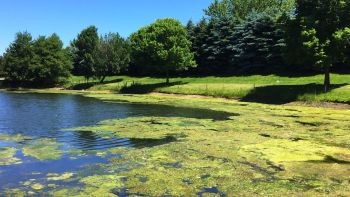 James Sumsion, CEO of predictive water intelligence specialists Kohtari, says the water sector needs to take a giant leap forward, so that it can anticipate and act upon water quality issues - rather than merely react.

 Hear how Scottish Water has completed its £235 million Ayrshire Glasgow Resilience Project - customers across Greater Glasgow, Ayrshire and East Renfrewshire will now benefit from a more secure and resilient water supply.
 Hear how United Utilities is accelerating its investment to reduce spills from storm overflows across the Northwest.
 Find out more about the remarkable career opportunities on offer at WSP - scroll down to watch the inspirational video.