

The World Resources Institute (WRI) have identified 13 new eutrophic areas following its work back in January with the Virginia Institute of Marine Science (VIMS) on the identification of 534 low-oxygen “dead zones” and an additional 228 sites worldwide exhibiting signs of marine eutrophication.
The 13 additional sites are already eutrophic and in danger of becoming dead zones, bringing the total number of coastal areas around the world known to be suffering from nutrient pollution to 775.
Urban runoff is a growing problem that most cities are only starting to address and one of the biggest threats to water quality around the world.
Nutrient pollution and urban runoff
Eutrophication occurs when water bodies are polluted with nutrients (for example, chemicals from fertilizer and sewage) that wash into surface waters from farms and urban areas that can cause oxygen depletion, fish kills, and ecosystem collapse. These are often called “dead zones” – because of the impact on fish and other sea life.
These issues can be especially problematic in urban areas. When it rains, nutrient pollution from lawns, pet waste, and vehicle exhaust washes into nearby waterways. This sewage (sometimes treated, sometimes not) is often discharged into nearby bodies of water.
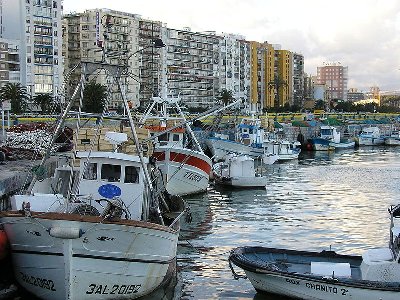 Algeciras in Spain is one of the newly recorded sites with symptoms caused by urban runoff. The nearby Palmones River Estuary is located in a small area with a high population and a mixture of agricultural, urban and industrial land.
Development in the City of Algeciras have exerted tremendous pressure on the bay. Symptoms of eutrophication in the estuary have been observed since the early 1990’s, caused by high phosphorous concentrations from urban runoff, organic sewage from nearby towns, and waste from both a paper mill and nearby industrial park. Recent reports indicate the system is highly eutrophic and already many shellfish species have been diminished or depleted.
Some regions are starting to take steps to reduce urban runoff and address wastewater issues. In New Jersey, in an effort to reduce the nutrient load to Barnegat Bay, a bill was recently passed that will limit the nutrient content of lawn fertilizers in the state.
In Maryland, a June 2000 bill imposed strict standards for enhanced nutrient removal on all major wastewater treatment plants, in an effort to control pollution entering the Chesapeake Bay.
Around the Great Lakes, where eutrophication is a growing problem, New York, Michigan and other surrounding states have enacted phosphorus bans for detergents.
Some cities, like Portland, OR, have begun to manage urban runoff through the use of “green infrastructure” such as forest lands, rooftop gardens, rain gardens, wetlands, ponds and trees planted along stream banks to intercept runoff and cycle nutrients before it can reach surface waters.
WRI has released the full data set available for the 775 eutrophic sites worldwide, together with an interactive map. The institute said it hoped that by making the data widely available, it would help to advance critically important research and policy discussions to address the problems associated with eutrophication.
 Enpure Ltd and Clean TeQ Water Ltd have announced a collaboration agreement to bring Clean TeQ Water's Moving Bed Ion Exchange-based nutrient removal technologies to water utilities across the UK.
 Near-real-time microbial monitoring of wastewater discharge and bathing waters is now possible thanks to the BactoSense ID solution created by Swiss-based bNovate Technologies.
 ABB has launched AquaMaster+™, a digital platform for smart water network management, designed to help water utilities monitor, analyze and manage their water networks, preventing pipeline water losses and optimizing operations.
 Craig Nienaber, Business Development Manager for Safe Access Solutions (SAS) at HUBER Technology, explores why the company is seeing a growing level of interest in its safe access solutions for critical infrastructure providers, including their application in wastewater treatment assets.

 Southern Water has released film and images showing what it’s like to walk inside Hampshire’s expanded Yew Hill underground reservoir for the very last time, before it gets filled with water.
 Hear how Scottish Water has completed its £235 million Ayrshire Glasgow Resilience Project - customers across Greater Glasgow, Ayrshire and East Renfrewshire will now benefit from a more secure and resilient water supply.
 Hear how United Utilities is accelerating its investment to reduce spills from storm overflows across the Northwest.