

Yorkshire Water is progressing work on the A65 sewer scheme - the second phase of the construction of a new sewer under the A65 in Ilkley has begun.
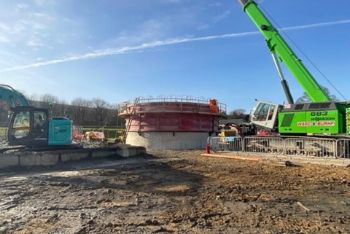
The water company’s new sewer aims to reduce the frequency and volume of storm overflows into the river Wharfe during periods of heavy rain.
Initial work at Yorkshire Water’s treatment works has been completed and the project has moved into the second phase - the use of trenchless technology to bore a tunnel under the A65 between Ashlands playing fields and Ilkley Wharfe View car park.
Trenchless technology will be used 5-8m underground, with boring machinery controlled remotely to keep disruption to a minimum while laying 800m of new sewer. This reduces the need to close the road as it lays pipework behind it and sends the earth back to the staging site where it is cleaned and recycled for use in other projects in the area.
Ben Roche, director of wastewater at Yorkshire Water, said:
“This project, which forms a major part of our investment in Ilkley, is progressing well and we’re pleased to be entering the second major phase.
“We’ve worked very closely with Bradford Council highways teams to keep the disruption for our customers to a minimum. As a result, we’re making use of trenchless technology, with equipment boring the hole and laying the sewer remotely, preventing the need to dig up the A65 to complete this work. For the majority of the project, there will be limited signs of our activity underground.
“Laying a new sewer to accommodate higher flows of wastewater during periods of heavy and prolonged rainfall will ultimately reduce the number and volume of discharges from Rivadale CSO, helping to improve water quality in the Wharfe.
The project is expected to be completed in January 2024
 ABB has launched AquaMaster+™, a digital platform for smart water network management, designed to help water utilities monitor, analyze and manage their water networks, preventing pipeline water losses and optimizing operations.
 Craig Nienaber, Business Development Manager for Safe Access Solutions (SAS) at HUBER Technology, explores why the company is seeing a growing level of interest in its safe access solutions for critical infrastructure providers, including their application in wastewater treatment assets.
 Albion Water, the first NAV (New Appointment & Variation) to have been established in1999 and now under the ownership of SDS Water Group, has appointed Andy Holland as its new Director of Business Development.
 UK water companies are invited to join an upcoming webinar which will explore how the sector can take indirect potable reuse (IPR) from concept to full-scale operational reality.

 Southern Water has released film and images showing what it’s like to walk inside Hampshire’s expanded Yew Hill underground reservoir for the very last time, before it gets filled with water.
 Hear how Scottish Water has completed its £235 million Ayrshire Glasgow Resilience Project - customers across Greater Glasgow, Ayrshire and East Renfrewshire will now benefit from a more secure and resilient water supply.
 Hear how United Utilities is accelerating its investment to reduce spills from storm overflows across the Northwest.