

Ofwat has today announced that it is opening enforcement cases into five water and wastewater companies as part of its ongoing investigation into how companies manage their wastewater treatment works.

Anglian Water, Northumbrian Water, Thames Water, Wessex Water and Yorkshire Water have been served formal notices to gather further information for enforcement purposes. This follows analysis of the information water and wastewater companies were asked to submit to Ofwat in late December about how many of their sewage treatment works might not be meeting requirements in their environmental permits, and what companies are doing to resolve that.
Concern about aspects of these five companies' submissions has prompted Ofwat's current focus. However, all water and sewerage companies in England and Wales remain subject to the ongoing investigation as Ofwat continues its review of the information it has gathered. Ofwat will keep the enforcement cases under review, and the companies in focus may change as new information comes to light.
Issuing notices to gather information for enforcement purposes is not necessarily an indicator that Ofwat intends to pursue formal enforcement action against the companies. However, it does indicate that Ofwat considers that a company may not be or may not have been complying with its obligations.
Data suggested "widespread shortcomings" in how water companies were running sewage treatment works

The development is the latest stage in the ongoing investigation - the regulators first announced that they had launched an investigation to assess the scale of the problem in November 2021.
David Black, Ofwat interim Chief Executive, said:
“The data that emerged at the end of last year suggested widespread shortcomings in how water companies were running sewage treatment works. The first phase of our investigation suggests those concerns are credible.
"We have identified shortcomings in most water and wastewater companies and are continuing to investigate. But we have already seen enough in five companies to cause serious concern and warrant us taking further action.
"We will now dig deeper into what these five companies have been doing, with the prospect of formal enforcement against them if we find they are failing on obligations Ofwat enforces.
"We will have further questions for all companies on this. In the meantime, we expect them to make quick progress in addressing any potential non-compliance they might have, whilst strengthening how they manage their environmental obligations as a whole."
In December David Black wrote an open letter to the public saying Ofwat will hold water and wastewater companies to account "if they have done wrong."
The five companies are targeted because the information they provided in December raised one or more of the following concerns:
- it reported a significant number of wastewater treatment works which the company considers might not be compliant with its environmental permits, and/or
- it raised concerns about how overall the company manages its compliance with its environmental obligations, and/or
- it didn't sufficiently show how the company have established whether its treatment works are meeting the requirements of its environmental permits, meaning Ofwat needs further information for its assessment.
Ofwat is continuing to monitor Southern Water's compliance following 2019 enforcement action
In addition to opening the five enforcement cases, Ofwat is continuing to monitor Southern Water's compliance with a package of commitments it made following Ofwat's enforcement action in 2019.
Ofwat will look at whether the latest investigation identifies anything new or different of concern not already covered by the previous enforcement action and commitments.
In their December responses to Ofwat, all but one company (Hafren Dyfrdwy) reported having had some treatment works that were potentially non-compliant with the flow to full treatment (FFT) requirements of their environmental permits.
Many companies set out the steps they have taken or are taking to bring those treatment works back into compliance. However, some companies did not offer sufficient assurances that they monitor and understand the compliance of their treatment works, or the root causes of any non-compliance.
Ofwat's enforcement powers can see the regulator fine companies up to 10% of their annual turnover.
More information expected to come to light as investigation progresses
More information is expected to come to light as the investigation progresses – the regulator is working closely with the Environment Agency, who are carrying out a criminal investigation into companies' compliance with environmental permits. Ofwat's focus and timelines differ from the Environment Agency because of the different statutory and enforcement powers each regulator has.
The Environment Agency is investigating potential breaches of individual environmental permits at treatment works under a criminal investigation (and as such must be conducted in accordance with criminal rules and procedures).
Ofwat is looking at how overall companies operate and manage their sewage treatment works and how they report on their performance.
Commenting on this latest development, Emma Clancy, Chief Executive of the Consumer Council for Water (CCW), said:
“People expect their sewerage company to act responsibly in protecting the environment but this investigation has raised serious questions as to whether some companies have failed to do that. These companies need to act urgently to ensure they are complying with their responsibilities and fix any harm that might have been caused. A legacy of this investigation has to be far greater transparency and higher standards of environmental performance from sewerage companies, which need to rebuild trust with their communities.”
“We want everyone to value water but people need to see compelling evidence that sewerage companies can be trusted to play their part in looking after our water environment.”
 Albion Water, the first NAV (New Appointment & Variation) to have been established in1999 and now under the ownership of SDS Water Group, has appointed Andy Holland as its new Director of Business Development.
 UK water companies are invited to join an upcoming webinar which will explore how the sector can take indirect potable reuse (IPR) from concept to full-scale operational reality.
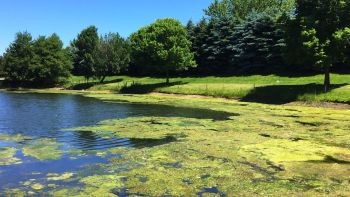 James Sumsion, CEO of predictive water intelligence specialists Kohtari, says the water sector needs to take a giant leap forward, so that it can anticipate and act upon water quality issues - rather than merely react.
 Ray Moulds, Sales Director at Flood Control International, takes a look at how automated sliding floodgates are supporting secondary containment at water and sewerage company sites.

 Hear how Scottish Water has completed its £235 million Ayrshire Glasgow Resilience Project - customers across Greater Glasgow, Ayrshire and East Renfrewshire will now benefit from a more secure and resilient water supply.
 Hear how United Utilities is accelerating its investment to reduce spills from storm overflows across the Northwest.
 Find out more about the remarkable career opportunities on offer at WSP - scroll down to watch the inspirational video.